REVIEW · WORKSHOPS
Surfing Lessons in Madeira
Book on Viator →Operated by Madeira Surf Center · Bookable on Viator
First surf lessons work best when the conditions are forgiving, and Madeira’s north coast helps a lot. You’ll get instruction for beginner surfing in a spot known for sand beaches and small waves, plus surf equipment rental included so you don’t have to haul gear.
I also like how the session is built around the basics you actually need: a wetsuit and board walkthrough, a warm-up, take-off practice, then the full chain—paddle, catch a wave, stand up, and stretch after. One potential drawback: surfing is weather-dependent, and even on a beginner-friendly coast you may still feel challenged if conditions shift.
The upside is that you’re not tossed into deep water. You’ll get safety rules, surf etiquette, and hands-on coaching designed for people who are seeing the surfboard for the first time.
In This Review
- Key things to know before you go
- Why the North Coast of Madeira Works for Beginner Surfing
- Your 2-Hour Madeira Surf Lesson: What Happens Step by Step
- Madeira Surf Center Meeting Point: Where You Start, and Why It Matters
- Gear Included: Wetsuit and Board Without the Carrying Stress
- Warm-Up, Stretching, and Take-Off Coaching: The Stuff That Prevents Frustration
- Catching Waves and Standing Up: Clear Progression, Not Random Trials
- Surf Etiquette and Safety: The Rules You Need Before You Flail
- Small Group Size (Up to 6): Faster Learning, Less Waiting
- Value Check: Why This Lesson Feels Worth It for First-Timers
- When Conditions Might Feel Tougher (and How to Manage That)
- Should You Book Madeira Surf Lessons in São Vicente?
- FAQ
- What’s the duration of the surfing lesson?
- Where do I meet for the Madeira Surf Center lesson?
- What time does the activity start?
- Is surf equipment rental included?
- Is the lesson offered in English?
- How big is the group?
- What skills will I learn during the session?
- What happens if the weather is poor?
- Can most people participate?
- What is the cancellation policy?
Key things to know before you go
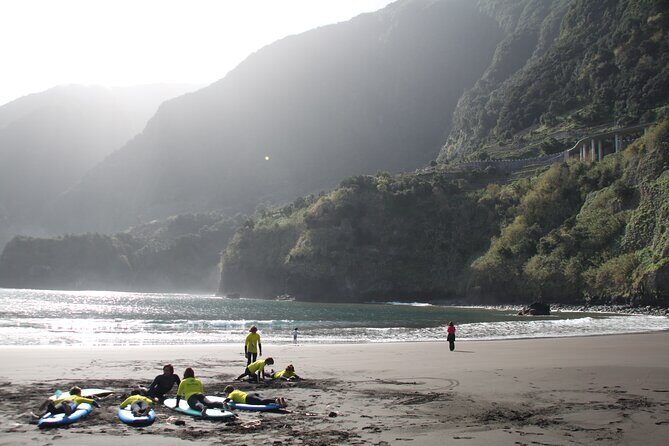
- Small-wave learning area on Madeira’s north coast for a safer start
- Gear is included (wetsuit and surf equipment), so packing is easy
- You’ll practice the full progression: warm-up → take-off → paddle → stand → catch waves
- Safety and surf etiquette guidance so you know what to do in the line-up
- English instruction for visitors who want clear coaching
- Small group size (max 6) so you’re not stuck waiting your turn
Why the North Coast of Madeira Works for Beginner Surfing
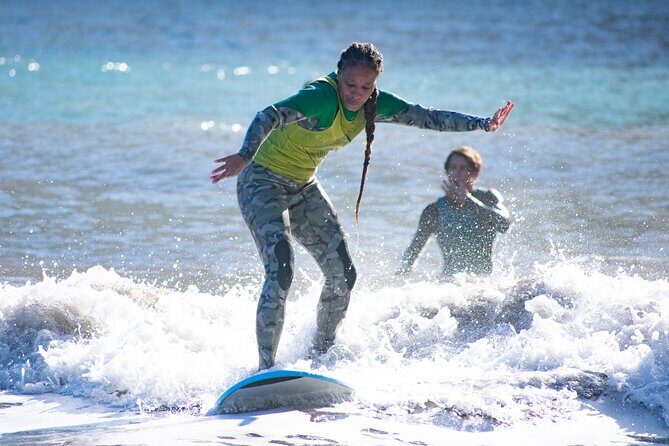
If you’re new to surfing, the biggest enemy isn’t you—it’s chaos. You want a place where the water is manageable enough to practice the motions without fighting every wave like a wrestling match. That’s why the north coast of Madeira is such a smart match for a first lesson.
Here, you learn at sand beaches with small waves, which matters more than people think. Sand helps with recovery if you fall (and you will at least once). Small surf helps you repeat the same actions—paddling rhythm, pop-up timing, and wave position—until they start to feel automatic. You’re also surrounded by the kind of scenery that keeps your motivation high even when the first attempts don’t go perfectly.
And yes, “small waves” doesn’t mean “zero challenge.” One comment noted the waves were big at the time, but the coaching and guidance still made the experience feel like a win. The lesson is built for beginners, not for showboats.
You can also read our reviews of more tours and experiences in Madeira
Your 2-Hour Madeira Surf Lesson: What Happens Step by Step
This is a focused ~2-hour session, starting at 9:30 am, and ending back at the meeting point. The flow is simple on purpose. You’ll go from land basics to water practice without wasting time.
Here’s the typical progression you can expect:
- Wetsuit + surfboard basics
You’ll learn how to wear a surf wetsuit and get a clear idea of what a surfboard is and how it works under your feet. If you’ve never used a wetsuit before, this part alone removes a lot of uncertainty.
- Warm-up and stretching
The lesson includes a warm-up plus instruction on stretching—before you paddle and after you finish. That’s not just comfort talk. Surfing uses shoulders and hips, and a short warm-up helps you avoid feeling stiff the moment you need mobility.
- Rules, safety, and surf etiquette
This is a beginner-friendly class, but it’s still surf. You’ll get key safety points and practical etiquette so you don’t accidentally create problems for others in the water.
- The take-off lesson
A first surf session isn’t mostly about standing on a wave. It’s about the take-off—the moment you shift from paddling to getting your feet under you. You’ll practice the mechanics the instructor is looking for.
- Paddle, catch a wave, and stand
After warm-up and take-off, you move into the wave part: paddling, catching waves, and finally standing up. This is where the lesson goes from theory to the feeling of surfing.
- Stretching after you surf
The session ends with stretching after the surf. It’s a small detail that helps you feel better when you walk away—especially if you plan to explore Madeira afterward.
Because it’s offered in English, you’ll be able to follow coaching cues clearly, from warm-up instructions to technique corrections in the water.
Madeira Surf Center Meeting Point: Where You Start, and Why It Matters
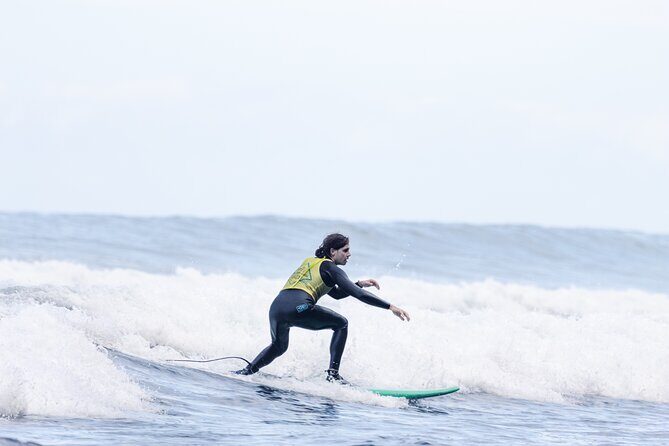
You’ll meet at Madeira Surf Center, at Fajã Areia, São Vicente, specifically listed with Baía dos Juncos / Fajã da Areia, 9240-029 São Vicente, Portugal. The start time is 9:30 am.
Why this location detail matters: in surf, timing and access matter. Being at the right beach area helps you get the lesson moving quickly and reduces downtime. You’re also set up for the kind of conditions that make beginner learning realistic on the north coast.
The good news is that the activity is set up as a mobile ticket experience, so you’re not juggling paperwork. You’re also told that confirmation is received at booking time, which helps you feel secure about the plan before you arrive.
Gear Included: Wetsuit and Board Without the Carrying Stress
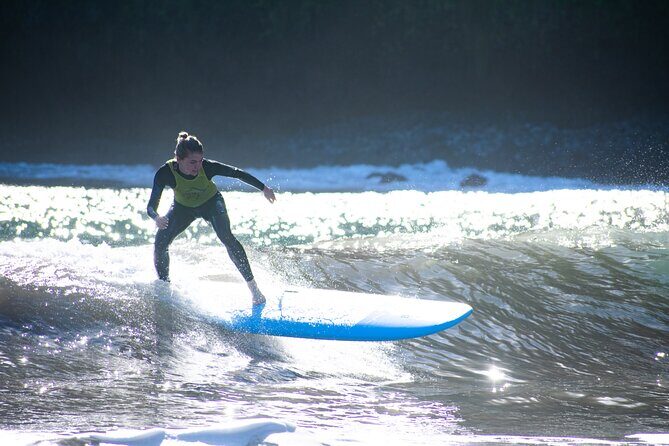
One of the easiest “value wins” in this lesson is that you don’t need to bring surf gear. Surf equipment rental is included, and you’ll learn how to wear the wetsuit during the session.
For first-time surfers, gear logistics can be a hidden hassle:
- If you have to bring a board, you end up managing awkward transportation.
- If you have to rent separately, you burn time coordinating.
- If you’re unsure which wetsuit to choose, you may arrive colder or less comfortable than you hoped.
Here, you step into a class where the setup is handled for you. That gives you more brain power for learning—because your attention should go to the technique, not to figuring out straps and fit.
And from a comfort standpoint, a wetsuit makes a huge difference. It helps you focus on paddling and timing instead of surviving the temperature.
Warm-Up, Stretching, and Take-Off Coaching: The Stuff That Prevents Frustration
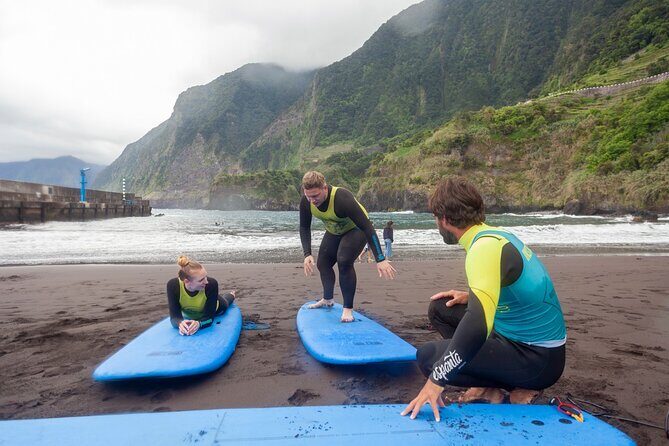
If your goal is to stand up even once, the lesson’s structure is built for that. The standout part is the emphasis on warm-up, stretching, and the take-off.
A lot of beginner frustration comes from trying to go straight into paddling and popping up without preparing your body. This course doesn’t skip that. Instead, it uses an order that supports learning:
- Warm up the muscles you’ll use most.
- Teach you how to stretch so you don’t feel wrecked later.
- Focus on take-off technique before the wave demands stack up.
Take-off is where beginners usually lose the moment. You’re often tired from paddling, off-balance, and unsure where your feet should land. By teaching take-off early, you give yourself a foundation you can apply as soon as you get a chance to catch a wave.
Then, once you’re in the water, you also learn the key flow:
- paddle (get into the right position)
- catch a wave (timing and positioning)
- stand up (weight shift and stability)
It’s the kind of coaching that reduces the “what am I doing wrong?” feeling.





Catching Waves and Standing Up: Clear Progression, Not Random Trials
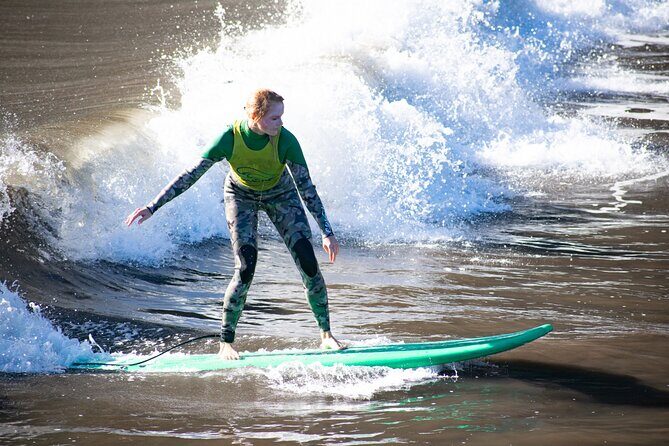
The water portion isn’t described as a long free-for-all. It’s guided, with steps that build.
Here’s what you’re practicing in the order that makes sense:
Paddling on the surfboard
You’re taught how to paddle so you can move with control. That’s not just about strength—it’s about body position and direction.
Catching waves
Once you can paddle effectively, the next job is timing. You learn how to catch waves, which also means learning when you’re ready versus when you’re just chasing movement.
Standing up
Standing is the payoff. It’s also the hardest moment for beginners because it requires quick coordination. That’s why the session includes take-off practice and warm-up beforehand.
And then there’s the recovery piece: after the surf, you stretch. If you’ve never done a physical activity that involves falling, scrambling, and muscle use across your shoulders and legs, you’ll appreciate how the session ends with your body in mind.
Even with conditions that might be less than perfect, this structure helps you keep progressing.
Surf Etiquette and Safety: The Rules You Need Before You Flail
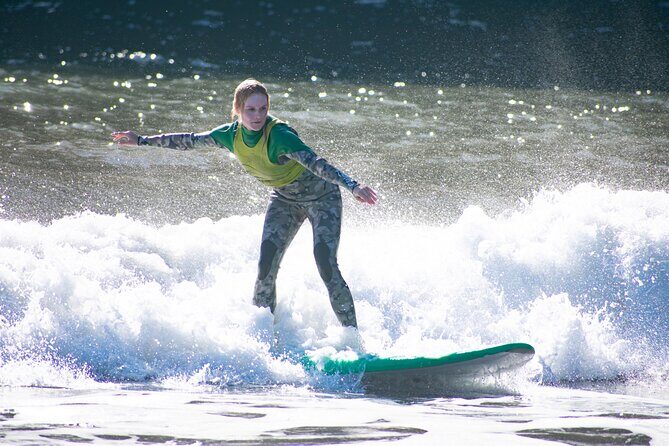
Surfing has a social rhythm. If you ignore basic etiquette, you can put yourself and others at risk. That’s why it’s a good sign that the lesson covers rules, safety, and surf etiquette.
During the class, you’ll learn the kind of guidance that usually prevents accidents:
- How to behave around others in the water
- How to think about safety while you’re learning
- What the instructor expects from you as a beginner
This is also where the best beginner experiences feel different from cheaper, rushed instruction. The instructor isn’t only focused on standing up. They’re focused on getting you comfortable with the “flow” of surfing.
A review highlighted the value of first-time surfer support and guidance, which is exactly what this safety-and-etiquette component is about.
Small Group Size (Up to 6): Faster Learning, Less Waiting
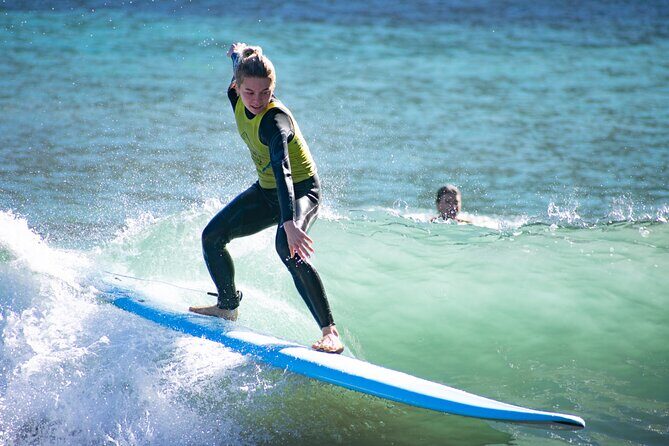
This class has a maximum of 6 travelers. That’s not a random number. Smaller groups usually mean:
- You get more direct attention.
- Corrections happen more quickly.
- You aren’t standing around for long stretches.
For beginners, time in the water is everything. You can learn a technique on land, but surfing is a timing sport. The smaller the group, the more chances you have to practice before you forget what you were just taught.
One review mentioned individualized instruction and a good start as a beginner. That matches what a small-group format is designed to deliver.
Value Check: Why This Lesson Feels Worth It for First-Timers
Even without seeing a price tag here, you can judge value by what you get relative to the effort you save. This lesson scores well on value because it reduces three big hassles:
- Gear is included
You get surf equipment rental and a wetsuit setup. That’s a real cost and logistics saver.
- The lesson is structured
Warm-up, take-off, paddling, catching waves, standing, and stretching are all included. You’re not paying for vague “time at the beach.” You’re paying for a teaching sequence.
- Coaching is specific
The session teaches rules, safety, and surf etiquette, plus key skills like paddle technique and take-off. That matters because it changes how you progress.
Add in the course being offered in English and running in a small group, and the whole package feels designed for real learning—not just being near the ocean.
When Conditions Might Feel Tougher (and How to Manage That)
No beginner course can control the weather or sea state. This experience is described as requiring good weather, and that affects whether the session runs.
Also, one review note said the waves were big during their first-time lesson. That doesn’t mean the lesson is “wrong.” It means you should come with the right expectations:
- You’ll be learning technique, not chasing big surf stunts.
- You may have moments that feel challenging even if the spot is known for smaller learning waves.
- Instructor guidance is what helps you get through that safely and still enjoy the session.
If you’re planning other activities the same day, keep a bit of buffer. Surf lessons can be weather-shifted, and you’ll want some flexibility.
Should You Book Madeira Surf Lessons in São Vicente?
I’d book this lesson if you want your first surf experience to feel guided, not chaotic. The setup is exactly what beginners need: small waves on Madeira’s north coast, included gear, warm-up and stretching, and coaching that takes you from take-off to paddling and standing up.
I’d think twice only if you can’t handle a weather-dependent plan. Since the session requires good weather, you want a travel schedule that can absorb a change.
Best fit for:
- First-time surfers who want clear basics and safety guidance
- People who don’t want to bring or figure out gear
- Anyone who prefers hands-on coaching in a small group
FAQ
What’s the duration of the surfing lesson?
The lesson is listed at about 2 hours.
Where do I meet for the Madeira Surf Center lesson?
You meet at Madeira Surf Center, Fajã Areia, São Vicente, Baía dos Juncos / Fajã da Areia, 9240-029 São Vicente, Portugal.
What time does the activity start?
The start time is 9:30 am.
Is surf equipment rental included?
Yes. Surf equipment rental is included, and you will also wear a surf wetsuit as part of the lesson.
Is the lesson offered in English?
Yes, the experience is offered in English.
How big is the group?
The activity has a maximum of 6 travelers.
What skills will I learn during the session?
You’ll learn the basics of wearing a wetsuit and using a surfboard, plus warm-up and stretching, take-off, how to paddle, catching waves, standing up, and stretching after the surf session.
What happens if the weather is poor?
This experience requires good weather. If it’s canceled due to poor weather, you’ll be offered a different date or a full refund.
Can most people participate?
The information says most travelers can participate, and the lesson is positioned as good for beginners.
What is the cancellation policy?
This experience is non-refundable and cannot be changed for any reason. If you cancel or ask for an amendment, the amount you paid is not refunded. If the minimum number of travelers isn’t met, you’ll be offered a different date/experience or a full refund.