REVIEW · WORKSHOPS
Surf lesson in Madeira
Book on GetYourGuide →Operated by Surf Clube da Madeira · Bookable on GetYourGuide
Madeira surfing from dramatic cliffs is a real rush. I love the small group coaching and the Atlantic-wave access that comes with pickup from Santa Luzia Park. I like that it’s designed for both beginners and intermediates. One possible drawback: ocean conditions can change, so your time in the water may shift.
What makes this lesson feel practical is how quickly you get guidance you can actually use. The instructor team includes English, Polish, Portuguese, and Spanish speakers, and names like Kyah and Jonny pop up in people’s experiences as friendly, hands-on coaches who helped them find their footing fast.
At $88 for about 4 hours total, it’s a solid value when you factor in the pickup and the full class structure. Just note it’s not suitable for children under 10, so plan accordingly if you’re coming as a family.
In This Review
- Key highlights you’ll care about
- Madeira’s coastline makes this lesson feel like more than a class
- Getting to the surf spot: Funchal pickup or self-drop at Porto da Cruz
- The warm-up: where you learn wave basics without getting overwhelmed
- 1.5 to 2 hours on waves: what the lesson feels like in the water
- What to bring (and what you’ll wish you packed)
- Instructors and languages: real coaching beats guesswork
- Price and value: is $88 worth it?
- Weather changes are part of the plan, not a surprise
- Who should book this Madeira surf lesson?
- Should you book Surf Clube da Madeira in Madeira?
- FAQ
- Is this surf lesson only for beginners?
- How long is the total activity?
- Do I get pickup from Funchal?
- If I’m driving, where should I meet?
- How small is the group?
- What languages are the instructors?
- What should I bring for the lesson?
- What happens if the ocean or weather conditions change?
Key highlights you’ll care about
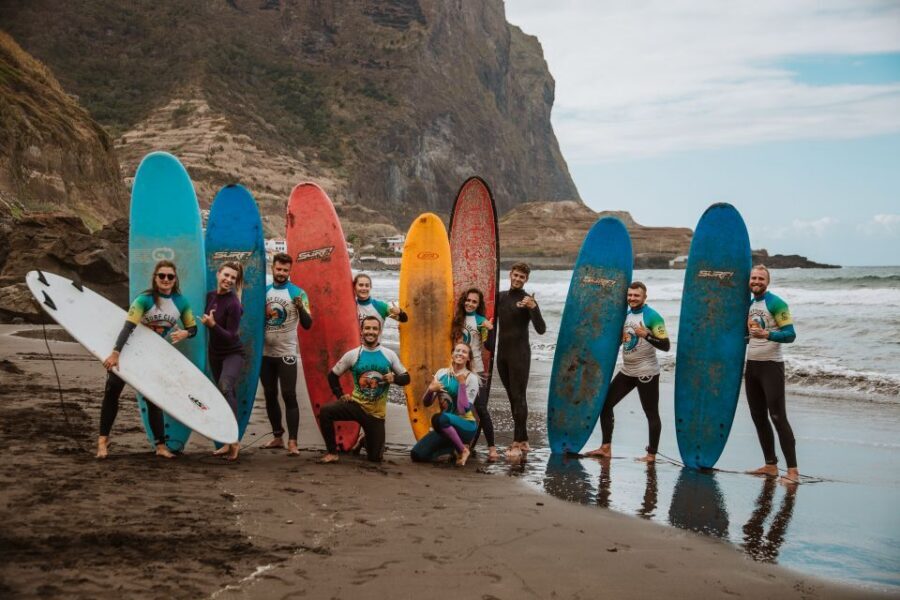
- Small groups (limited to 5): more personal coaching, less standing around.
- Pickup from Santa Luzia Park in Funchal: you get to the surf spot without figuring out transport.
- 1.5 to 2 hours surfing in the water: most of the lesson is actual time on the board.
- Beginner-friendly structure: warm-up, coaching in real conditions, then waves.
- Multi-language instructors: English, Polish, Portuguese, Spanish for clearer instruction.
Madeira’s coastline makes this lesson feel like more than a class
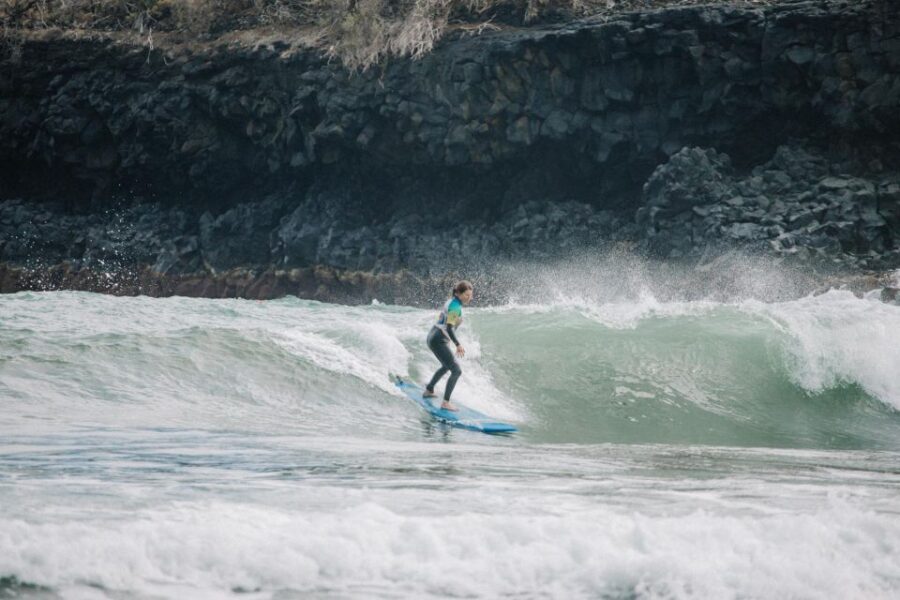
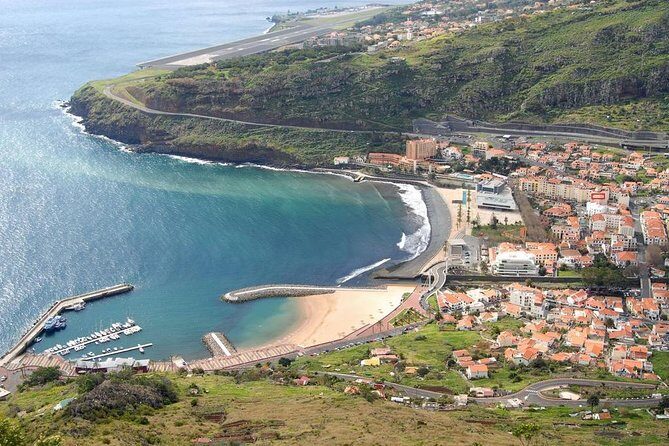
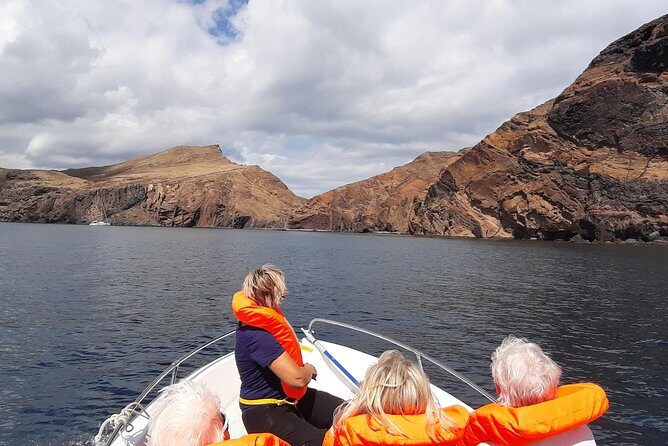
Madeira’s surf lesson doesn’t happen in a generic “somewhere near the beach” setting. You’re surfing along a coastline known for cliffs and dramatic shoreline views, which changes the whole vibe. Even if you’ve surfed before, the location adds a sense of island adventure that you don’t get in flat-water places.
I like that the experience leans hard into real ocean conditions. The Atlantic can be strong and changeable, so you learn not just how to stand, but how to stay safe, read what the sea is doing, and work with an instructor’s local knowledge. That’s the difference between a fun novelty and a skill-building session.
There’s also a mental upside for first-timers: the excitement of the setting makes it easier to commit. When you’re on an island with cliffs, you’re not thinking about awkward gear problems. You’re thinking about the wave you’re about to try.
You can also read our reviews of more tours and experiences in Madeira
Getting to the surf spot: Funchal pickup or self-drop at Porto da Cruz
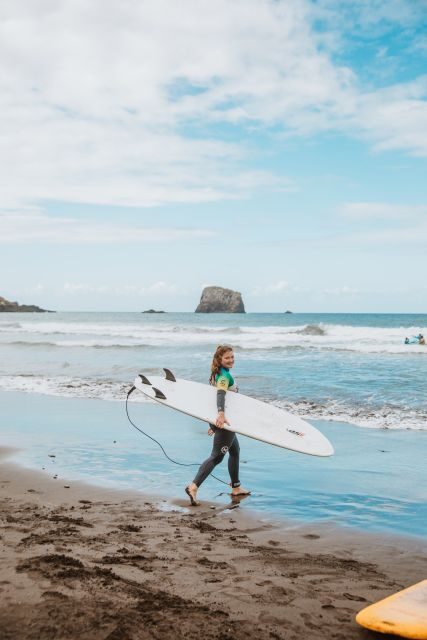
Logistics matter with surf, because you don’t want to waste time in transit while the ocean is doing its thing. This lesson is timed for around 4 hours total, and the pickup from Jardim Santa Luzia / Santa Luzia Park in Funchal is part of the plan.
If you’re picked up, plan for about 45 minutes to get from Funchal to the surf area. The schedule shown for the lesson includes the pickup time. So if you don’t want pickup, you should arrive at the surf spot 45 minutes after the time shown (that timing detail is key).
If you’re driving, you’ll want to meet at the surf school in Porto da Cruz. This is helpful if you prefer flexibility, and it also means you can control when you park and warm up. Either way, the goal is simple: get you to the water ready to go, not sitting in gear limbo.
Tip: come with a plan for meeting the group. The activity notes say you should wait near the bus stop for pickup, so give yourself a couple extra minutes to avoid stress.
The warm-up: where you learn wave basics without getting overwhelmed
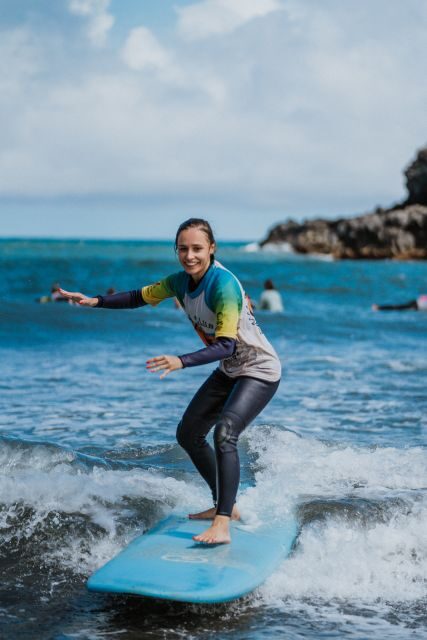
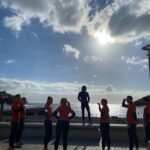
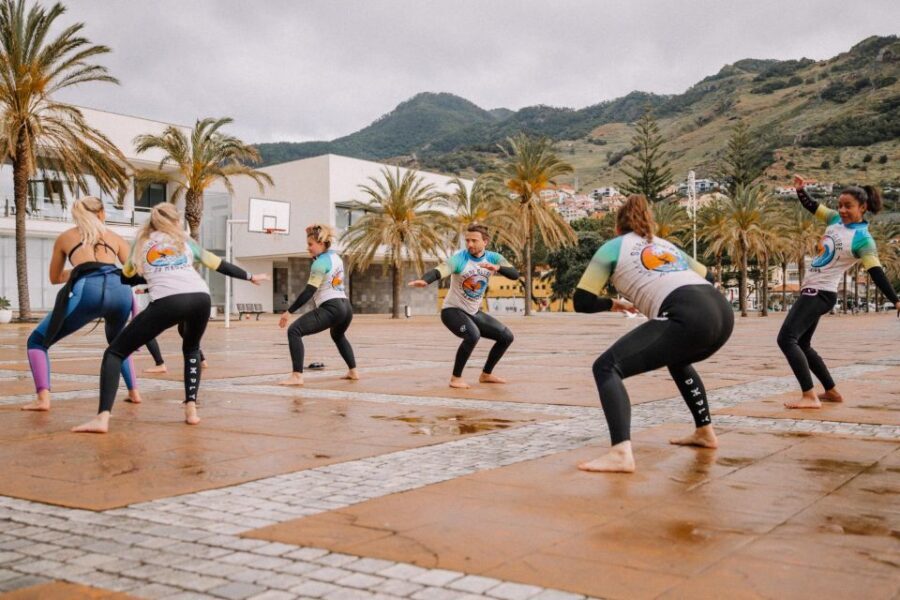
Before you hit the ocean, you get a warm-up and prep session at the surf spot. This matters more than people expect, because good surf lessons don’t start when the board is under your feet—they start when you learn what to do when the water gets real.
For beginners, the prep phase typically means:
- getting comfortable with the board,
- learning key safety and positioning points,
- and practicing the basic movements you’ll use during your first attempts.
Even if you’re not totally new, this step helps you align expectations. Madeira surf can feel powerful, and a short coaching reset keeps you from panicking once you’re in the water. The fact that the lesson supports both beginners and intermediates is a big deal: you’re not stuck in a one-size-fits-all pace.
From the way the session is described, instructors focus on getting you moving quickly. You’re aiming to spend most of your time surfing, not just watching.
1.5 to 2 hours on waves: what the lesson feels like in the water
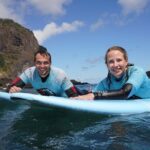
The core of this experience is your 1.5 to 2-hour surfing lesson in the water. For many people, that’s the best part—because the sea is where you actually learn. Standing up even once changes your confidence fast, and multiple attempts build the muscle memory.
Because the group is limited to 5 participants, you usually get more targeted attention. That’s why first-timers feel like they’re not left behind. It also explains why more advanced surfers can still get something out of it: you’re not competing for the coach’s time.
Expect instructors to guide you through the flow of the session—when to paddle, how to time your start, and how to approach each attempt based on what the waves are doing that day. Ocean conditions can shift, so coaching adapts. If the conditions aren’t perfect, the session still works around safety and wave selection.
One extra reality check: some people found the time in the water shorter than expected when conditions were less favorable. That’s not a failure of the class—it’s the ocean being the ocean. The best surf lessons treat safety and wave timing as part of the teaching, not an inconvenience.
What to bring (and what you’ll wish you packed)
Surf in Madeira is active, and the list of what to bring is simple. You’ll want to show up ready to get wet, stay comfortable, and change out of damp gear afterward.
Bring:
- Swimwear
- Towel
- Sunscreen
- Change of clothes
- Water
That change of clothes detail is worth taking seriously. You’ll be in and out of the water, and it’s easy to underestimate how quickly the chill and wind can set in after you’re done.
Also, sunscreen is not optional. Madeira gets sun even when the weather feels cooler, and saltwater plus wind can wreck your skin fast. Water helps too, because you’ll be using energy and you may not want to scramble for drinks after.
The lesson provider includes pickup, but the gear you personally control—clothes, towel, and water—still comes down to you.


Instructors and languages: real coaching beats guesswork
One of the strongest points here is instructor support. You’ll have an instructor who speaks English, Polish, Portuguese, and Spanish, which makes communication feel easier—especially when you’re nervous or brand new.
In a lesson like this, clarity is everything. If you only half-understand what to do, you’ll waste time and feel frustrated. Multi-language coaching helps you get the instructions fast, and that’s where confidence comes from.
Names that show up in people’s experiences include Kyah and Jonny, both described as friendly and attentive. That matters because a good coach isn’t just teaching technique. They’re also reading your fear level, your balance, and how quickly you learn when the wave timing gets tricky.
What I like as a traveler: you’re not just paying for access to the ocean. You’re paying for the person who helps you turn chaotic energy into repeatable movement.
Price and value: is $88 worth it?
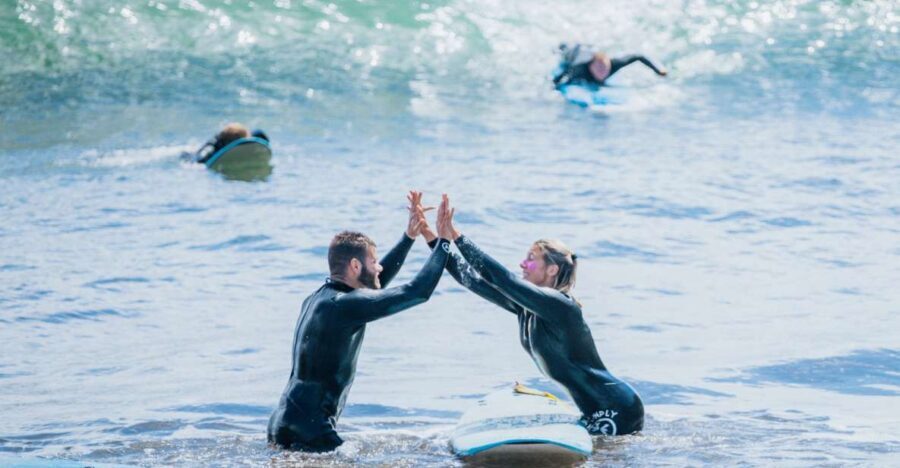
At $88 per person for roughly 4 hours, the value depends on what you’d otherwise pay to cobble it together. In many places, the “cheap” surf option ends up costing more once you add transport, equipment, and a guide who’s only half-present.
Here, you’re getting:
- pickup from Santa Luzia area in Funchal,
- a structured lesson for beginners and intermediates,
- and a class size limited to 5 participants.
Small groups usually cost more, but they also improve your odds of actually progressing during the session. If you’ve ever tried a self-guided surf day, you know how much energy goes into figuring out where to go and how not to get in trouble. A guided lesson compresses that learning curve.
Is $88 low? No. But with the time and the coaching focus, it’s a reasonable “pay once and get the full experience” option—especially for people who want help without running their own logistics.
Weather changes are part of the plan, not a surprise
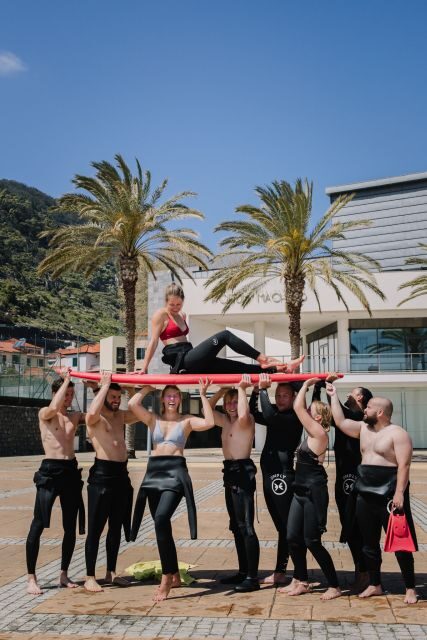
The activity is clear that surf lesson times and dates may change due to ocean and weather conditions. That’s not just fine print; it’s surf reality.
You’ll also find guidance about staying updated via a WhatsApp group link, where schedule changes are shared. For you, that means you should plan to keep your phone handy that day. If you’re the kind of person who hates uncertainty, this is still manageable—you just need to monitor updates so you’re not guessing.
Ocean conditions can affect:
- whether the session runs exactly as planned,
- how much time you spend in the water,
- and which wave set is safest.
Instead of treating that as a disappointment, treat it as part of how surf lessons work. The best outcome is still the same: you get a safe session with enough wave time to feel like you learned something.
Who should book this Madeira surf lesson?
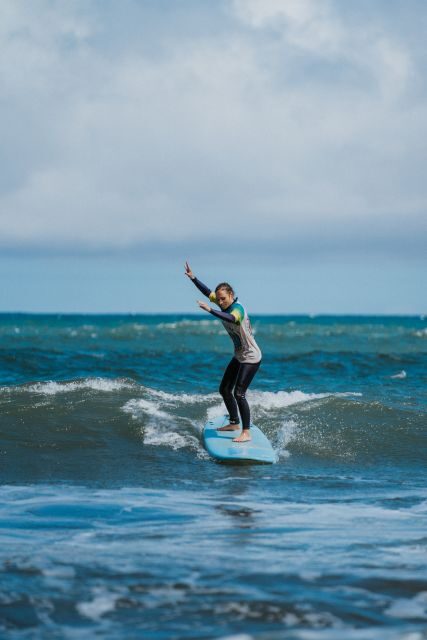
This lesson is best for:
- Beginners who want coaching and structure, not guesswork.
- Intermediates who want real wave time with instructor feedback.
- People who like active island experiences with a little adrenaline.
It’s not suitable for children under 10, so if you’re traveling with younger kids, you’ll need another option.
I also think it’s a good choice for couples and friends because the group setup is small enough that you won’t feel like you’re just part of a big crowd. The experience is designed for group learning, but you still get enough attention to make progress.
If you’re short on time in Madeira, the full package format helps. You’re not piecing together transportation plus lessons plus gear. You show up, warm up, surf, then head back to Funchal.
Should you book Surf Clube da Madeira in Madeira?
I’d book it if you want a guided surf session with real coaching, a small group, and a setup that gets you to the water from Funchal. The price isn’t bargain-basement, but pickup plus structured instruction makes the math feel fair—especially when you’re paying for time on the board, not just a tour of the shoreline.
I’d think twice if you hate schedule variability. Since conditions can change, your exact water time might shift. If that sort of uncertainty annoys you, make sure you’re scheduling this lesson with enough flexibility on your Madeira day.
If you’re coming to Madeira for nature and you’re willing to let the ocean set the terms a bit, this is a fun, well-instructed way to experience the island beyond viewpoints.
FAQ
Is this surf lesson only for beginners?
It’s designed for beginners and intermediates, so you’re welcome even if you’ve never surfed before. The class format also supports different experience levels, since it’s coached in a group setting.
How long is the total activity?
The total duration is 4 hours. Most of that time is focused on the surfing portion, with 1.5 to 2 hours spent in the water.
Do I get pickup from Funchal?
Yes. Pickup is included from Jardim Santa Luzia / Santa Luzia Park in Funchal. You’ll be asked to wait near the bus stop for pickup.
If I’m driving, where should I meet?
If you’re driving, you should meet at the surf school in Porto da Cruz.
How small is the group?
The group is small, limited to 5 participants.
What languages are the instructors?
Instructors speak English, Polish, Portuguese, and Spanish.
What should I bring for the lesson?
Bring swimwear, sunscreen, a towel, change of clothes, and water.
What happens if the ocean or weather conditions change?
Lesson times and dates may change due to ocean and weather conditions. The provider also shares updates through a WhatsApp group, so you can stay informed about any schedule changes.