REVIEW
Amazing experience with Bees, honey and Pollen in Madeira Island
Book on Viator →Operated by Bees experiences · Bookable on Viator
A hive visit in Madeira can feel like science class with snacks. You get a safe, calm look at how a colony works, plus time to handle honey frames and see bee life up close.
I love the personal, safety-first hosting from Marcia and Helder, and I love that the session includes both the bees and the food side—honeys, fresh pollen, cheese, regional cider, and a side of poncha. You’ll also get explanations of how the hive is organized and chances to spot different bee types, including the queen.
One thing to consider: this experience depends on good weather, and it runs on a set afternoon window, so you’ll want to plan your Madeira schedule around it.
In This Review
- Key things to know before you go
- Why Madeira’s Bees Feel More Personal Than a Typical Tour
- From Santo António da Serra to the Hive: The 4-Hour Flow
- The Hive Presentation: Learning the Colony Before You Get Close
- Spotting the Queen Bee and Understanding Roles
- Handling Honey Frames and Watching Bee Behavior Up Close
- Tasting Madeira’s Bee Products: Honey, Pollen, Cheese, Cider, and Poncha
- Hosts Marcia and Helder: Enthusiasm That Actually Helps
- Price and Value: What You Get for $138.58
- Best Time to Book and How to Plan Around It
- Who This Experience Suits (and Who Might Want Something Else)
- Should You Book the Bees, Honey and Pollen Experience?
- FAQ
- Where does the experience start and end?
- How long is the Bees, Honey and Pollen experience?
- When is it available?
- Is it a private tour?
- What’s included in the tasting?
- What happens if the weather is bad or I need to cancel?
Key things to know before you go
- Santo António da Serra start point: the activity begins in this Madeira area and returns you to the same meeting spot.
- Hive safety that still feels hands-on: you can touch honey and interact with the bees in a controlled, peaceful way.
- You learn the colony system in real time: the group goes over hive structure, bee roles, and how the hive is organized.
- Honey-frame time: you may pick up honey frames and watch the bees’ behavior up close.
- Food and drink pairing: honey tastings, fresh pollen, cheeses, regional cider, and Madeira-style poncha.
- Private attention: it’s private for your group, and the hosts personalize the flow for each client.
Why Madeira’s Bees Feel More Personal Than a Typical Tour
Madeira is known for coastal views and levadas, but this stops you thinking about nature as scenery. Instead, you’re looking at nature as a working system—one that runs on tiny workers, timing, and careful care.
What makes this different is the balance. You get real beekeeping context first, then you get hands-on time with the hive, then you get to taste what the bees produce. It turns a vague interest in bees into something you can actually picture.
And yes, the vibe is friendly. In the small details—how questions are handled, how the pace matches your group—you can tell Marcia and Helder want you to leave with understanding, not just photos.
You can also read our reviews of more tours and experiences in Madeira.


From Santo António da Serra to the Hive: The 4-Hour Flow
This is about 4 hours long, and it follows a clear, step-by-step rhythm. You meet in Santo António da Serra, Portugal, then the session ends back at the meeting point—so you’re not hunting transport or logistics afterward.
The timing matters because it’s scheduled as a late-afternoon block (Monday, 3:00 PM to 5:30 PM). Late-day light also tends to help when you’re watching small things, like bee movement near frames, and it keeps the whole experience from feeling rushed.
You’ll start with a welcome and a short presentation, then you’ll move through the hives. The structure is designed so you understand what you’re seeing before you’re asked to look for it.
The Hive Presentation: Learning the Colony Before You Get Close
Right at the beginning, you’re taught how a hive works and why bees matter for the ecosystem. The hosts don’t just throw facts at you; they frame bees as the engine behind pollination and plant life.
Then comes the practical part: how the hive is organized. You’ll see explanations of how frames and spaces function, and you’ll learn what different areas and roles mean inside a colony. It’s the kind of overview that helps later, when you’re staring at frames and wondering why everything looks so busy.
A key moment is the focus on bee types—plus a real attempt to show the queen bee. Even if you don’t spot her immediately (hives can be unpredictable), the instruction helps you understand why a hive behaves the way it does.
Spotting the Queen Bee and Understanding Roles
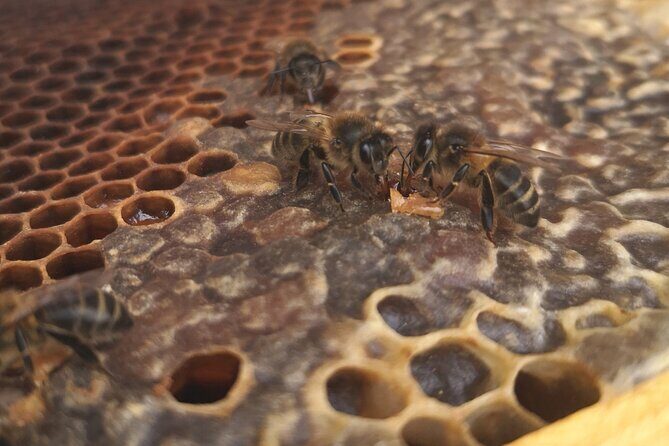
Watching a hive is one thing; understanding roles makes it click. Your guide’s explanations cover the different types of bees in a colony and what you’re likely to observe.
Here’s the payoff for you: when you know what you’re looking for, you stop treating the hive like chaos. You start seeing patterns—why certain bees cluster, why movement changes when frames are handled, and why the colony has a system behind all that activity.
The experience also emphasizes the idea of bee life continuing in a very active way, including the chance to watch the birth of bees. You’re not just observing adults; you’re seeing a living process that’s always going.
Handling Honey Frames and Watching Bee Behavior Up Close
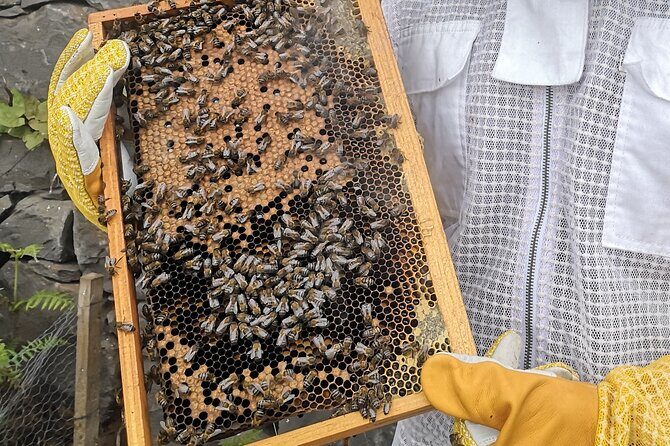
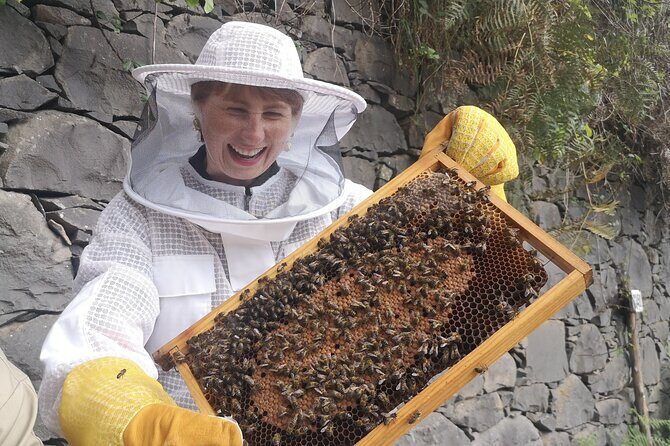
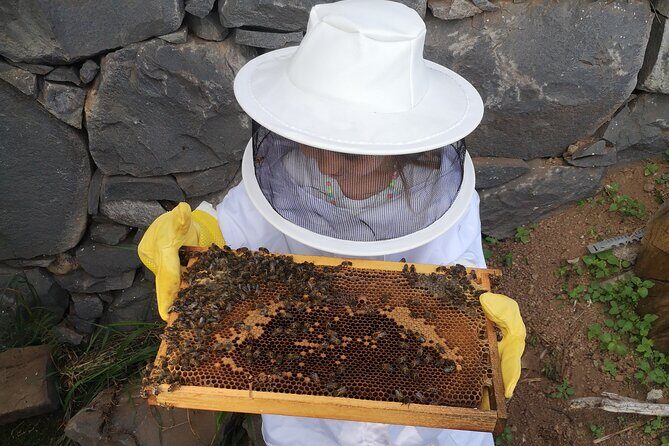
This is the part most people remember. You can pick up honey frames and observe bee behavior up close, but in a way that feels controlled and calm rather than chaotic.
The safety tone is a big deal here. The hosts make sure you understand what’s happening before interaction, and they keep the environment peaceful. That matters because bees react to disturbance—so good guidance turns hands-on time into an experience that feels respectful.
If you’ve never been near a hive, you might expect fear. Instead, the session is set up to make your curiosity the main feeling. You’re learning while you’re there, not after the fact.
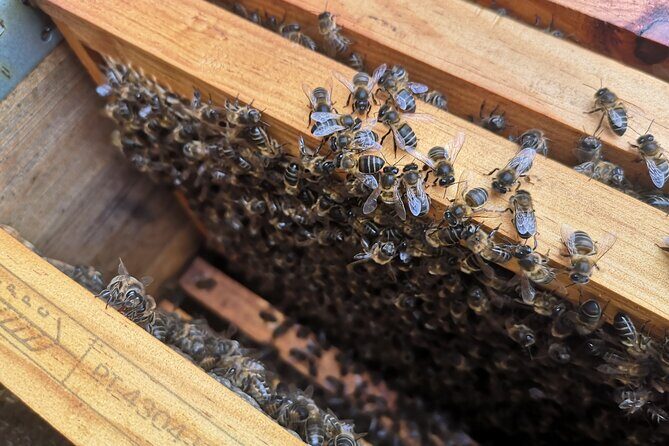
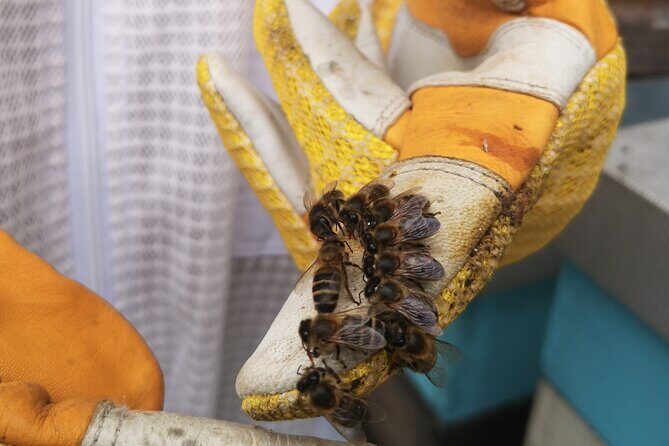
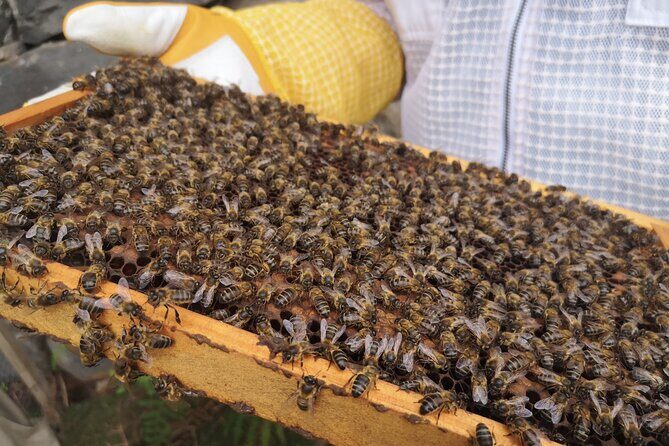
Also, pay attention to how bees behave during handling. The guide’s pointing and pacing help you notice differences—where bees concentrate, how they move when something changes, and how the colony responds to the frame being studied.



Tasting Madeira’s Bee Products: Honey, Pollen, Cheese, Cider, and Poncha
Beekeeping experiences often stop at the hive. Here, you get the edible payoff, and it’s not an afterthought.
You’ll taste various honeys, fresh pollen, cheeses, and regional cider. This is smart, because it ties the science to the senses. You learn about what the bees collect, then you taste the result, and it makes the whole session feel complete.
One more detail: the experience is described as bees with a side of poncha. Since poncha is part of Madeira’s food-and-drink culture, it adds a local twist that keeps the tasting from feeling generic.
How I’d approach the tasting: start with the honey you like most and then try to compare textures and flavors. Fresh pollen can be very different from honey—more earthy, sometimes sharper—so it helps you understand that bees produce more than sweetness.
And don’t rush it. This is your chance to turn what you saw into a memory that has taste behind it.
Hosts Marcia and Helder: Enthusiasm That Actually Helps
A lot of tours talk about “passion.” This one shows it in how the experience is delivered.
Marcia and Helder are focused on personalizing the visit for each client. That means the explanations can land at your level—whether you’re a total beginner or someone who’s already curious about beekeeping. The hosts also make sure safety is part of the rhythm, not a checklist at the end.
What stands out from their approach is how social it feels without losing the focus. People describe it like hanging out with old friends, and you can see why: the hosts are welcoming, they guide interaction carefully, and they make questions feel normal.
If you’re the type who likes to learn one or two solid things and then go deeper with questions, this style works well. If you want silence and you don’t want explanations, you might find it a bit more talkative than you prefer—but the pace is part of what makes the hive viewing understandable.
Price and Value: What You Get for $138.58
At $138.58 per person, this is not a quick budget activity. But for a private, hands-on hive visit with tastings, it can be good value—especially if you care about learning something real.
Here’s what you’re paying for, in plain terms:
- Private group setup, so you’re not fighting for attention in a crowd.
- Guided hive education, including how the hive is organized and bee roles.
- Actual interaction time, including honey-frame handling and close bee observation.
- A full tasting spread: multiple honeys, fresh pollen, cheeses, regional cider, and poncha.
Duration also matters. Four hours gives enough time for instruction, time at the hive, and a tasting that doesn’t feel rushed. If a short tour is just a peek and a photo stop, this one aims to make you understand what you’re seeing.
If you’re in Madeira for a week and want just one “off the beaten path” nature experience that feels different from hikes and viewpoints, this is a strong candidate.
Best Time to Book and How to Plan Around It
You’ll pick a scheduled slot, and it runs on Mondays in the afternoon window (3:00 PM to 5:30 PM). Since the activity requires good weather, have at least one backup activity in mind the day you book.
The good news: confirmation is handled at booking time, and you’ll get a mobile ticket. That reduces stress when you’re bouncing around Madeira.
Also, plan ahead. The average booking lead time is about 53 days, which suggests this isn’t always a last-minute fill. If this is a priority for you, snag it earlier rather than hoping.
Who This Experience Suits (and Who Might Want Something Else)
This is a great fit if you:
- want a nature experience that’s interactive, not just scenic
- like food tied to place and process
- enjoy learning with real-world context
- prefer smaller-group attention and a calm pace
- have curiosity about beekeeping, even at a beginner level
It may be less ideal if you:
- don’t like structured instruction and prefer quiet observation only
- get nervous around insects (even though the hosts keep it controlled)
- are extremely schedule-tight and can’t swap plans if the weather changes
Most travelers can participate, so you don’t have to be an expert beekeeper to enjoy it. The hosts guide you through what to do and what to expect.
Should You Book the Bees, Honey and Pollen Experience?
If you want something memorable in Madeira that’s both real and practical, I’d book it. The combination of safe hive interaction, learning how the colony works, and a tasting that ties honey and pollen to local flavors makes this feel like more than a novelty.
Book it especially if you like hands-on travel—where you leave understanding something tangible, not just seeing it. And if you’re a food lover, the honey/pollen/cheese/cider pairing (plus poncha) is the kind of local detail that makes the afternoon feel worth your time.
If you’re on the fence, your decision comes down to one thing: can you build your schedule around a Monday afternoon and good weather? If yes, this is a strong pick. If no, you might end up with stress rather than fun.
FAQ
Where does the experience start and end?
It starts in Santo António da Serra, Portugal, and it ends back at the same meeting point.
How long is the Bees, Honey and Pollen experience?
The experience lasts about 4 hours.
When is it available?
The activity runs on Mondays from 3:00 PM to 5:30 PM, with listed opening hours covering 01/09/2023 – 11/25/2026.
Is it a private tour?
Yes. This is a private experience, and only your group participates.
What’s included in the tasting?
The tasting includes various honeys, fresh pollen, cheeses, and regional cider.
What happens if the weather is bad or I need to cancel?
The experience requires good weather. If it’s canceled due to poor weather, you’ll be offered a different date or a full refund. Cancellation is free up to 24 hours in advance for a full refund; within 24 hours, the amount paid isn’t refunded.