REVIEW · WORKSHOPS
Funchal: Madeira Island Group Surf Lesson
Book on GetYourGuide →Operated by MadSea - Bodyboard & More · Bookable on GetYourGuide
Surfing Madeira starts with one small first wave. Off the coast near Funchal, this lesson puts you in the clear Atlantic water with a real focus on technique and confidence, not just thrashing for waves. I like the way your instructor breaks things down fast, with patient coaching I’ve seen highlighted for surfers like João aka Johnny and Kaia, plus the hands-on setup that gets you paddling sooner.
Two things I especially like: you get to learn on beginner-friendly surf spots around Praia do Seixal, Praia de Machico, and Porto da Cruz, and you get that classic surf-school flow where a beach warm-up and technical demo comes before you ever stand up. One possible drawback: timing and spot selection can shift because the schedule depends on tides, sea, and weather, so your start time might land in the morning or the afternoon.
In This Review
- Key things I think you’ll care about
- Madeira Surf Lesson: Why This 4 Hours Feels Like More
- Where You’ll Ride: Seixal, Machico, and Porto da Cruz
- Praia do Seixal
- Praia de Machico
- Porto da Cruz
- The Lesson Flow: Beach Warm-Up to First Stand-Up
- Before you paddle: warm-up and technique on the beach
- In the water: catch waves, get feedback, repeat
- Instructor Quality: João, Kaia, Kaja, Sebastian, Monica
- Coaching style that matters for beginners
- A note on group size
- Gear, Wetsuits, and What to Pack (So You Don’t Ruin the Day)
- Cold-water practical tip
- Food and drinks: plan ahead
- Price and Value: About $100 for Real Coaching
- Timing on Madeira: Morning or Afternoon, Depending on the Sea
- Who This Surf Lesson Suits Best
- Should You Book This Madeira Island Surf Lesson?
- FAQ
- How long is the Madeira surf lesson?
- Where does the surf lesson take place?
- What’s included in the price?
- Is food included?
- What should I bring?
- Do the class times stay fixed?
- What languages are the instructors?
- Is this lesson only for beginners?
- What happens if the lesson is canceled due to conditions?
- What’s the cost and how does pay later work?
Key things I think you’ll care about
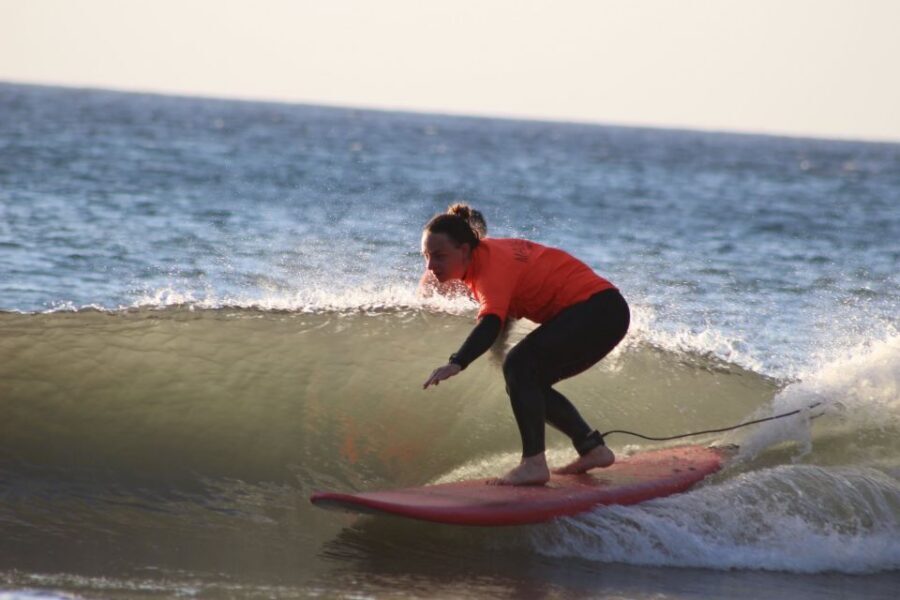
- Multiple beginner-suited beaches: Praia do Seixal, Praia de Machico, and Porto da Cruz
- Beach warm-up + technique demo: then straight into the water for practice
- Gear and transport handled for you: wetsuit and board included, plus pickup to the beach
- Coaching that stays personal: safety-first instruction and feedback to improve each ride
- Group size can vary: some sessions may run larger if groups get combined
Madeira Surf Lesson: Why This 4 Hours Feels Like More
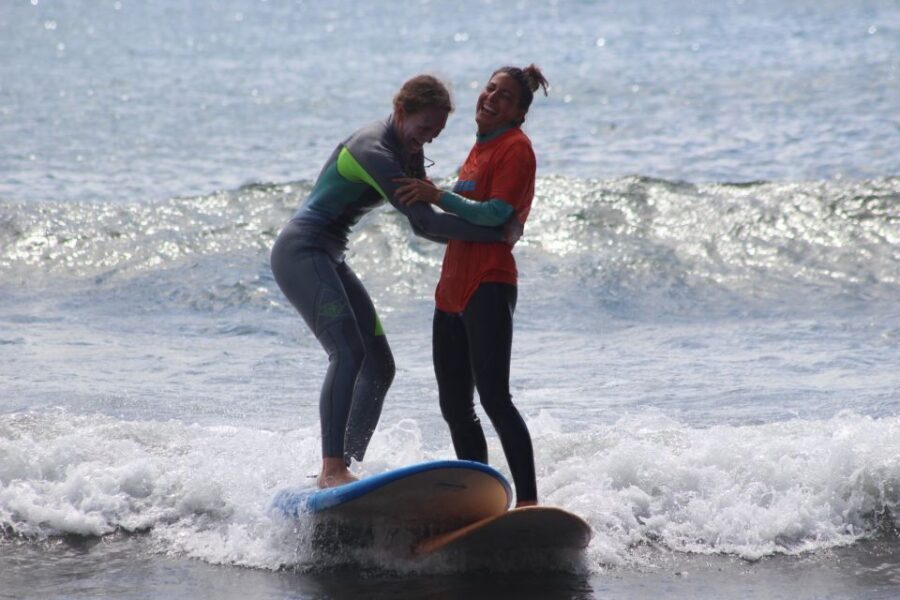
If you’re coming to Madeira for the ocean views, this is a way to stop just looking and actually do something in the water. The lesson is set up for first-timers and for people who already surf, with coaching aimed at helping you go from anxious paddling to catching waves with control.
The best part is that you’re not thrown in cold. You start with a warm-up on land and a technical demonstration, which matters because surfing is mostly about correct timing and body position. Then you step into the Atlantic with a wetsuit and board that are meant for you, not the random gear you might grab on your own.
And yes, the feeling of catching your first wave off Madeira’s coast is pretty hard to beat. Expect cool water on your legs and an adrenaline spike when it finally clicks. The instructors also emphasize safety and making sure you’re comfortable enough to keep trying.
You can also read our reviews of more tours and experiences in Madeira
Where You’ll Ride: Seixal, Machico, and Porto da Cruz
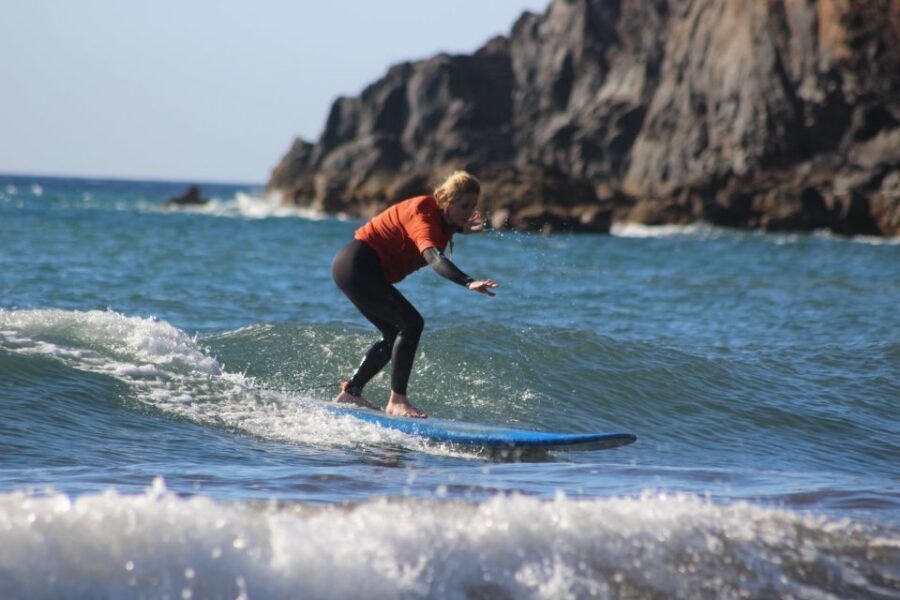
One reason I like this lesson is the choice of surf areas. Madeira has a reputation for dramatic cliffs and big waves, but this surf format aims you at spots that work well for learning.
Praia do Seixal
Praia do Seixal is often described as a beginner-suited option during the lesson format. For you, that usually means waves that are manageable enough to practice popping up and staying balanced. It’s the kind of beach where you can focus on your technique without constantly getting knocked around.
Praia de Machico
Praia de Machico is another highlight on the list. The big value here is variety: you’re not stuck practicing the exact same pattern the whole time. Switching locations based on conditions helps you get more chances to catch waves that suit your level.
Porto da Cruz
Porto da Cruz shows up again and again as a favorite surf stop. In practice, it’s a place where the lesson can feel extra special because the scenery and the surfing vibe are both strong. More importantly for you as a beginner, it’s also a spot the instructors use to help groups get waves quickly and safely.
A reality check: the exact beach can shift based on tide, sea state, and weather. That’s not a dealbreaker; it’s how surf lessons stay playable. If conditions aren’t right, you’ll get moved to keep the learning experience realistic.


The Lesson Flow: Beach Warm-Up to First Stand-Up
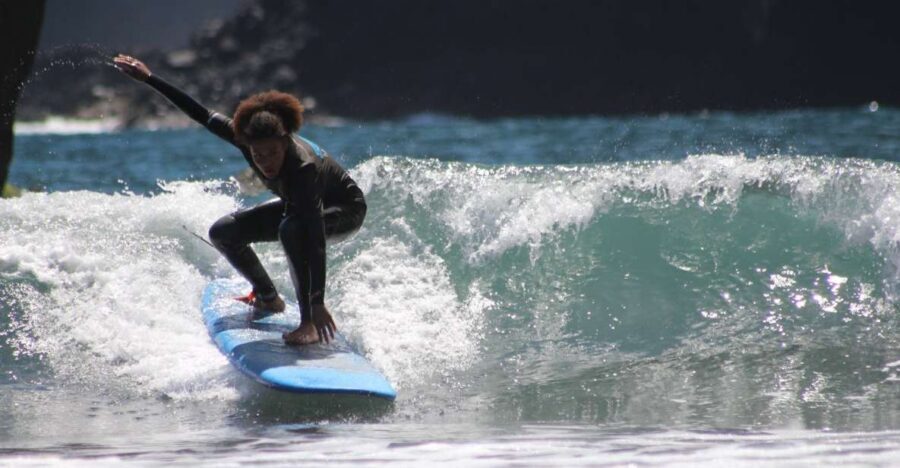
This is a 4-hour session, and it’s structured in a way that makes sense for learning. You spend time getting warmed up and seeing what to do before you’re in the water with the waves moving everything around you.
Before you paddle: warm-up and technique on the beach
You’ll begin with a warm-up and a technical demonstration. The point here isn’t to impress you with jargon. It’s to help you understand:
- how to handle your stance on the board
- how to time your takeoff
- what to watch for in the set of waves
If you’re new, this is where your fear drops. If you’ve surfed before, this is where you can fix the small things that stop you from improving.
In the water: catch waves, get feedback, repeat
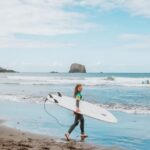
Then you go into the clear Atlantic waters off Madeira. You’ll feel the cold quickly—Madeira water can bite, and the longer you’re in, the more you notice it. That said, wetsuits are included, and the coaching style stays focused on safety and success.
From the feedback style I’ve seen described, instructors keep correcting in simple, usable ways. You get encouragement when you’re close and direction when something is off, which is what helps you stand up and ride more than once.
Instructor Quality: João, Kaia, Kaja, Sebastian, Monica
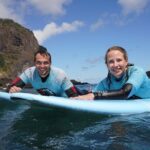
Good instruction is the difference between a fun dip and real progress. What stands out in the instructor stories is a mix of patience and hands-on coaching. You’ll see that in how many people say they improved quickly, including complete first-timers who were confidently standing within hours.
Names that come up in strong feedback include João aka Johnny, Kaia, Kaja, Sebastian, and Monica. Even when groups combine or the class size swells, the theme stays consistent: the team aims to keep everyone safe, motivated, and progressing.
Coaching style that matters for beginners
If you’re worried about safety or looking clumsy, you’ll be glad they focus on basics and control. A lot of first-time surfers freeze when they realize they have to coordinate paddling, timing, and balance all at once. A good instructor helps you simplify it into steps so you can actually attempt the move instead of overthinking it.
A note on group size
One caution from the feedback: sometimes the group can be larger, especially if a previous session gets canceled and groups get combined. That can mean slightly less one-on-one attention than you’d hope for. At the same time, some sessions are described as small enough that each surfer still gets enough time to practice and get feedback.
My practical advice: if you want extra attention, go into it with a mindset of learning from the whole group coaching. Even in larger groups, the instructors’ job is to keep you surfing and improving.
Gear, Wetsuits, and What to Pack (So You Don’t Ruin the Day)
The lesson includes surfing equipment—wetsuit, surfboard, and related gear—plus insurance and your instructor. That takes away a big hassle. You’re not hunting for rental timing or trying to guess which board size you need.
Still, you control your comfort. Bring the essentials listed:
- comfortable shoes (for beach areas and walking)
- swimwear (under your wetsuit setup)
- a towel
- snacks
- sunscreen
- water
Cold-water practical tip
Even with a wetsuit, you’ll feel cool conditions once you’re in and out of waves. Bring extra attention to drying and warming up between sets. A towel becomes more than a convenience—it’s part of keeping your session enjoyable.
Food and drinks: plan ahead
Food and drinks aren’t included. That’s easy to fix. Pack snacks that you can eat quickly before you head into the water and again after. Hydration matters too, especially if you’re sweating from excitement and then cooling down fast.
Price and Value: About $100 for Real Coaching
At $100 per person for a 4-hour lesson, the value comes down to three things: instruction quality, gear provided, and the fact that you’re getting access to good beginner areas without doing the planning yourself.
Here’s why it can feel worth it:
- You’re not just renting a board. You’re paying for a structured lesson with warm-up, technique guidance, and active coaching in the water.
- Transportation to the beach is included, which removes one of the hardest parts of spontaneous surf days on an island.
- Insurance is included, which gives peace of mind when you’re learning something physical in the ocean.
Where it might not be the best fit:
- If you’re expecting a private lesson or a tiny class for a high price point, you might find the group size variable. Still, the consistent message in the feedback is that instructors work to keep everyone safe and moving forward.
My bottom line: if you’ve never surfed in Madeira (or you want a faster path to getting better), this price is aligned with what you’d pay for equipment + coaching elsewhere—minus the headache of sorting it all out yourself.
Timing on Madeira: Morning or Afternoon, Depending on the Sea
Your class time depends on tides and sea/weather conditions. That means your pickup could be in the morning or in the afternoon, and you’ll be contacted to arrange the exact pickup time.
This is normal for surf lessons, but it does change your planning. If you’re juggling other Madeira activities, keep your schedule flexible on the day you book. Surf can’t be forced, and the safest plan is to go when conditions allow you to learn with less stress.
If the session gets canceled due to conditions, you’ll either receive a refund or be able to book an alternative date. The goal is still the same: keep you in water at the right time, not just check a box.
Who This Surf Lesson Suits Best
This is a strong match for:
- Absolute beginners who want the basics and a realistic chance to stand up
- People who already surf and want coaching feedback to fix technique
- Families and teens learning together, since instructors work to keep the experience safe and understandable
You might want a different approach if:
- You require a guaranteed small group for very personal coaching (group size can vary)
- You’re not comfortable with cold water and being in the ocean for a while, even with a wetsuit
If you’re the type who likes learning by doing—watch, practice, repeat—this format clicks. It’s also a good way to experience Madeira’s Atlantic energy without needing advanced experience first.
Should You Book This Madeira Island Surf Lesson?
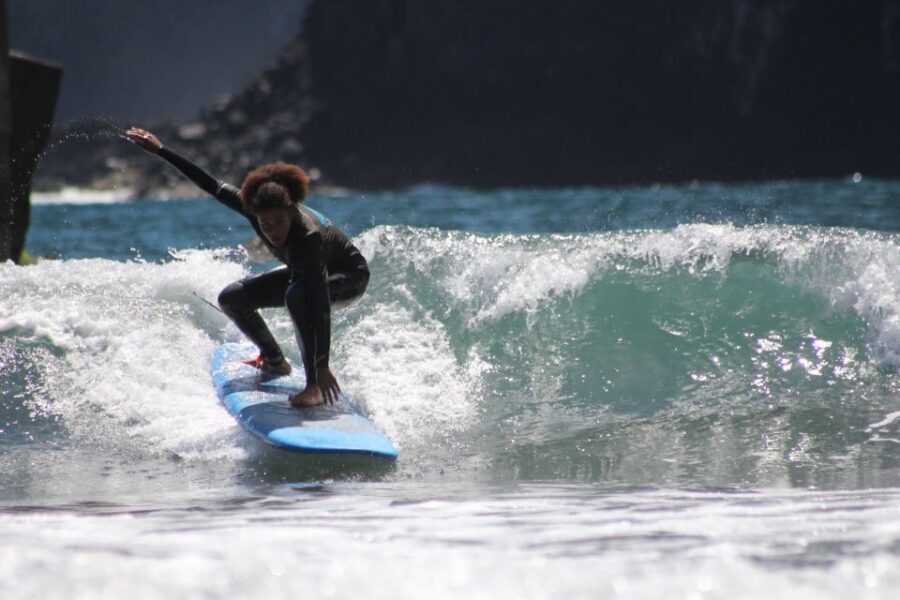
I’d book it if you want more than a one-time beach visit. The structure is built for learning: beach warm-up and technique demo first, then repeated wave attempts with instructor support. Add in included gear, transportation, and a solid track record of beginners standing up within hours, and it becomes a practical, high-value way to add surfing to your Madeira trip.
Skip it only if your schedule can’t flex for tide and weather, or if you’re specifically looking for a guaranteed private lesson with minimal group variation.
If you’re in Funchal and you want that Madeira-from-the-sea feeling, this is one of the cleanest ways to make it real.
FAQ
How long is the Madeira surf lesson?
The lesson lasts 4 hours.
Where does the surf lesson take place?
You’ll learn in the clear Atlantic waters around Madeira. The lesson focuses on surf spots including Praia do Seixal, Praia de Machico, and Porto da Cruz.
What’s included in the price?
The price includes transportation to the beach, surfing equipment (like wetsuit and surfboard), insurance, and the instructor.
Is food included?
No. Food and drinks are not included.
What should I bring?
Bring comfortable shoes, swimwear, a towel, snacks, sunscreen, and water.
Do the class times stay fixed?
No. Class times depend on tides, sea conditions, and weather. The lesson can be scheduled for morning or afternoon, and the instructor contacts you to arrange the pickup time.
What languages are the instructors?
The instructor speaks German, Portuguese, and English.
Is this lesson only for beginners?
It’s designed for both first-timers and people who already surf and want to improve their skills.
What happens if the lesson is canceled due to conditions?
If the activity is canceled due to tides and weather, you’ll get a refund or you can book an alternative date.
What’s the cost and how does pay later work?
The price is $100 per person. You can reserve now and pay later, meaning you can book your spot without paying immediately.