REVIEW · PICO DO ARIEIRO HIKE
EAST: Pico do Arieiro & Laurissilva Forest – Full Day tour
Book on Viator →Bookable on Viator
Three wow stops in one East-Madeira day. This full-day route strings together Pico do Arieiro drama, the UNESCO Laurissilva forest experience, and big coastal viewpoints like Ponta de São Lourenço. I love how much you see for the money, but the one real consideration is that fog can swallow the highest peaks.
You start with a classic photo target at Garajau (the huge Christ statue), then roll into Camacha’s A-framed charm and summer flower color. From there it turns into “up, up, and wow” as you climb toward the island’s high country, with a guide keeping you on track and explaining what you’re actually looking at.
If you’re the type who likes slow travel, you might feel the day is fast. You’ll do real viewpoints plus at least one walk (the Balcões levada walk), so wear shoes you trust on uneven paths.
In This Review
- Key highlights at a glance
- Why this East Madeira day tour makes sense
- The first hour: Garajau viewpoints and a smooth start in Camacha
- Pico do Arieiro: the ridgeline views at 1,818 meters
- Ribeiro Frio and the Laurissilva Forest levada walk
- Santana: triangular thatched buildings and terraced farm life
- Guindaste viewpoint: north-coast drama and lava-formed features
- Machico and Pico do Facho: pirates, beacons, and sugar cane history
- Ponta de São Lourenço: the island’s eastern edge and dual coastline views
- Porto da Cruz: a north-coast village with a working sugar connection
- Price, value, and what costs extra
- Guide quality matters: what to watch for in the real world
- Timing, comfort, and how to prepare
- Who should book this Pico do Arieiro and Laurissilva tour
- Should you book this East Madeira full day tour?
Key highlights at a glance
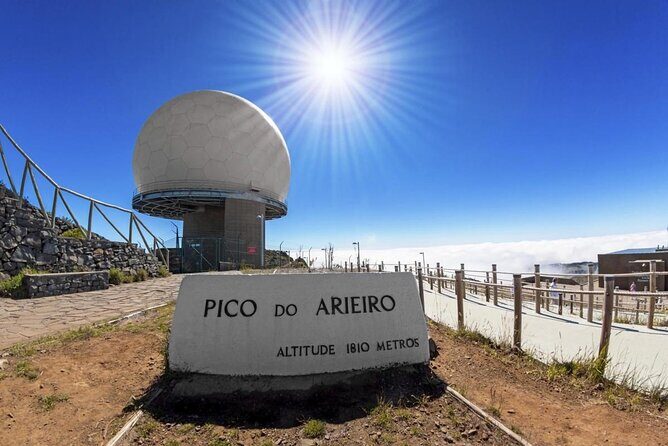
- Pico do Arieiro at 1,818 meters: cliffy ridgelines and big sky above the clouds
- Laurissilva Forest UNESCO stop: a levada walk around Ribeiro Frio (with a small extra entry fee)
- Santana’s triangular thatched houses: terraces, farm life, and the cow-shed architecture of Madeira
- North-coast geology and ocean views: Guindaste viewpoint plus a nod to ancient lava formations
- Ponta de São Lourenço’s double-coast views: north and south coasts can show on clear days
Why this East Madeira day tour makes sense
If you only have one day to cover the east side of Madeira, this is a practical way to do it. You’re not relying on buses, no car navigation, and no guessing where the viewpoints sit relative to the road.
The value is in the mix: a high-altitude viewpoint (Pico do Arieiro), an official UNESCO nature area (Laurissilva Forest), and coastal stops that show Madeira’s personality from multiple angles. For about $38.98 per person, that’s a lot of “Madeira moments” packed into roughly eight hours.
The pacing isn’t leisurely. It’s a full-day sightseeing drive with short-to-medium time at each place, so it’s best when you like seeing a lot rather than hanging out in one village for hours.
You can also read our reviews of more tours and experiences in Madeira
The first hour: Garajau viewpoints and a smooth start in Camacha
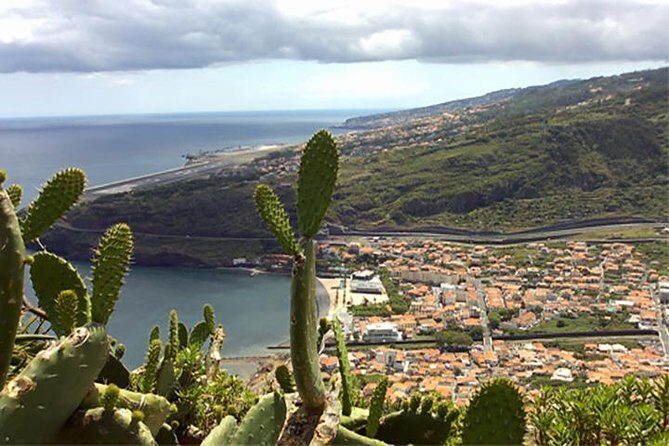
You begin at Miradouro do Cristo Rei do Garajau, anchored by the big Christ statue erected in 1927. It’s a replica of Christ figures seen in Rio de Janeiro and Lisbon, and it gives you a solid view over Funchal plus cruise ships moving toward the harbor.
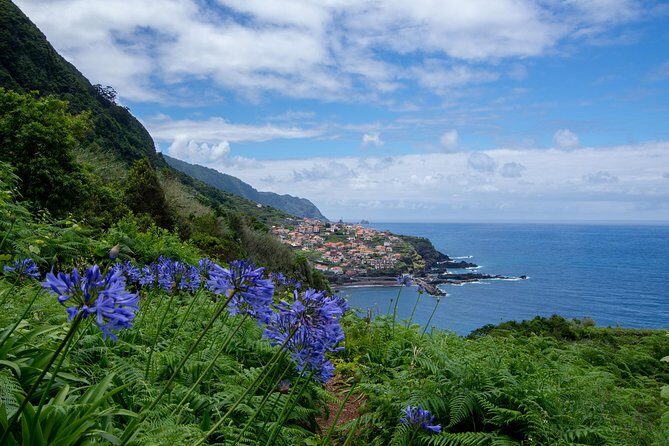
Then the tour swings toward Camacha, which sits on a high plateau northeast of Funchal. This is where you get East Madeira’s famous A-framed house style, along with orchard scenery. In summer, the road can be lined with blue agapanthus blooms, and there’s even a history nugget: Camacha is noted as the first place where soccer was played in Portugal in 1875.
What I like here for you: this part feels like an easy warm-up before the higher, colder altitudes. You’ll also get early context about Madeira’s settlement patterns—how people built, farmed, and looked outward.
Pico do Arieiro: the ridgeline views at 1,818 meters
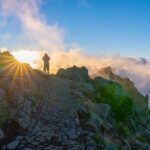
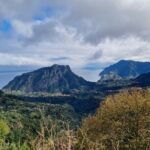
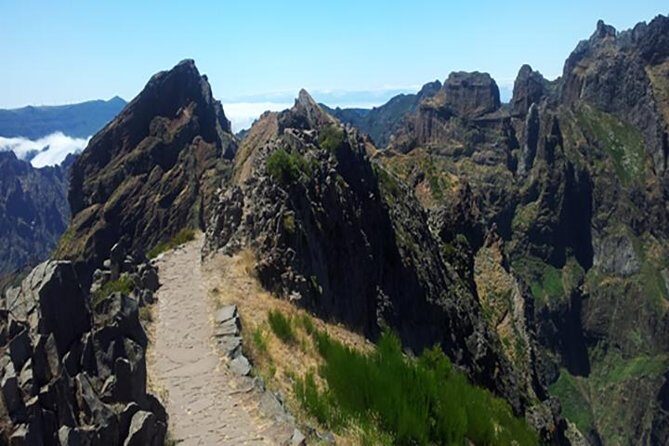
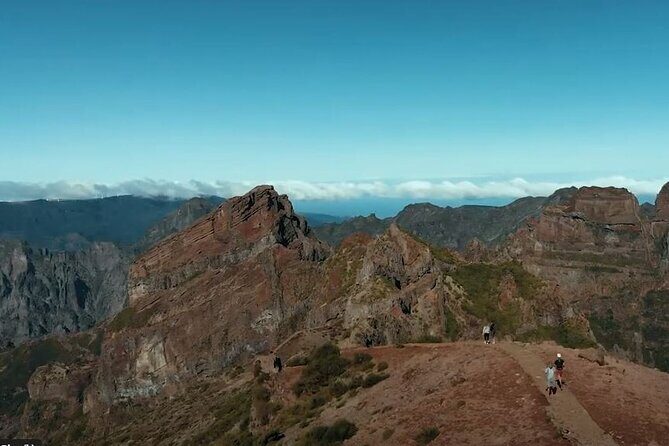
Pico do Arieiro is the star of the day for many people, and for good reason. At 1,818 meters (about 5,965 feet), it’s Madeira’s third highest peak, and the terrain shifts fast as you climb—from green woodland to bare rock.
This is the kind of place where Madeira’s famous “knife-edge ridges and sheer cliffs” make sense. When weather cooperates, you get an endless-feeling series of valleys and ridgelines, with clouds often hanging low like cotton wool in the distance.
The drawback is also clear: clouds and fog can erase the top views. Even when that happens, the stop isn’t totally wasted because the drive still shows the change from forest to exposed rock—but your best photos depend on visibility.
Practical tip: bring layers and a light rain layer even if Funchal feels warm. The temperature can shift fast at elevation, and “no big walking” doesn’t mean “no cold.”
Ribeiro Frio and the Laurissilva Forest levada walk
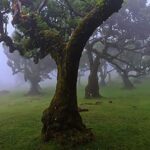
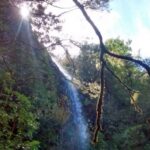
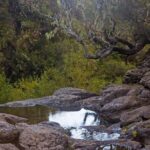
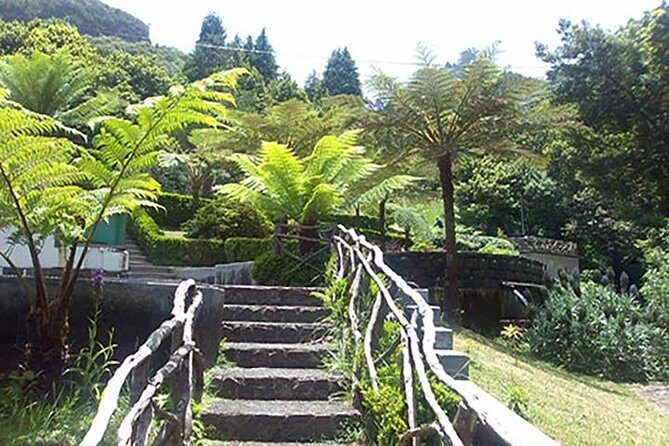
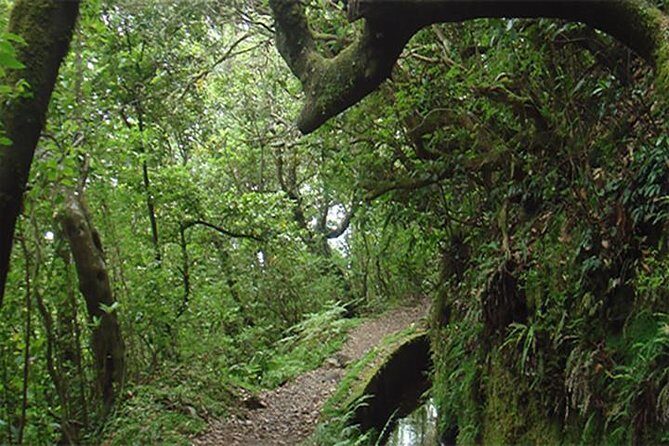
After the high peak, the day turns calmer at Ribeiro Frio, a spot set among the Laurissilva Forest. This forest is UNESCO World Heritage (classified in 1999), and it’s one of those places that helps you understand why Madeira’s interior matters—not just the coast.
Here you have time for the Balcões levada walk, around 45 minutes. Admission for the walk is not included, with an extra 3 euros entry fee noted for Balcões.
Why this stop is valuable: levadas (the island’s irrigation channels) and forest trails are how you experience Madeira’s living water system. Even in a short walk, you’re seeing the kind of infrastructure that shaped agriculture and daily life.
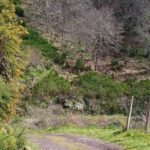
What to consider: you’ll want good walking shoes. This is still Madeira, meaning uneven ground and steps are possible. If you’re prone to slipping on wet stone, take your time.
Santana: triangular thatched buildings and terraced farm life
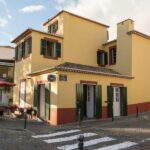
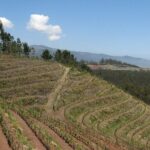
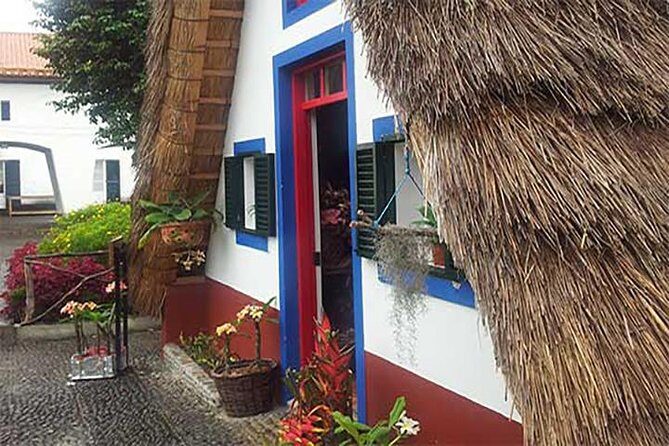
Santana is your “Madeira farming culture” check-in, and it’s more than a pretty photo stop. The area is described as showing domestic and agricultural prosperity, with terraced fields and hay meadows, plus fruit orchards like apple, pear, and cherry.
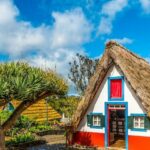
The headline attraction is the triangular thatched buildings used historically as cow sheds. These structures were also used for living, and the stop includes time to see how spacious the Santana A-farmed buildings are when you visit.
You’ll appreciate this stop most if you like seeing how people actually lived—not only looking from afar. Also, the terraced scenery gives context for the island’s steep geography: farms here are built around slope survival.
Timing note: you’ll have about 1 hour 30 minutes here, which is enough to look around without feeling rushed. Still, don’t count on long breaks to linger—this tour runs as a loop across the island’s east and north viewpoints.

Guindaste viewpoint: north-coast drama and lava-formed features
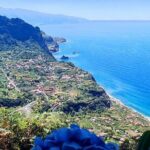
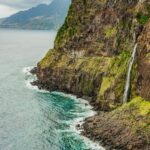
Next, the tour heads toward the Miradouro do guindaste, perched on slopes in the Santana municipality. This viewpoint is built for one thing: the north coast.
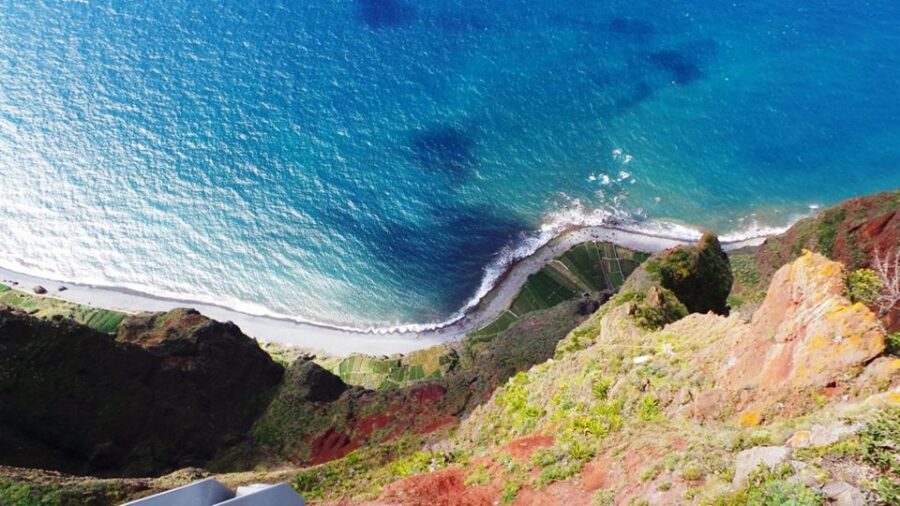
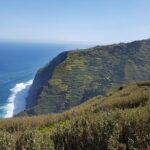
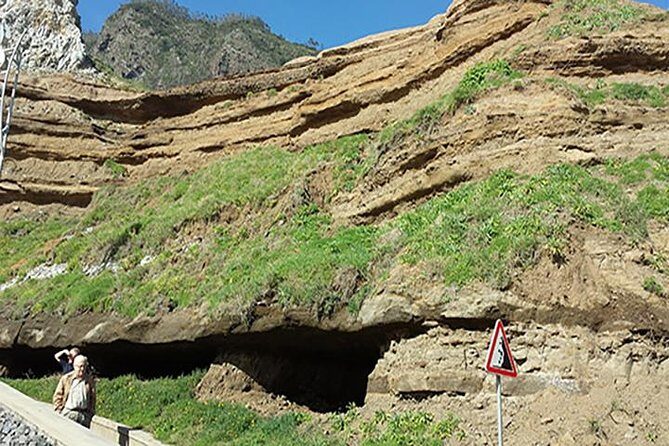
You get a dramatic perspective over the Atlantic, plus the pebble beach of Foz da Ribeira do Faial. There’s also a geology detail worth paying attention to—the viewpoint area is tied to a columnar disjunction formed by ancient lava flows.
What I like for you: pairing a forest-and-farms day with a north-coast geology moment helps the whole story click. Madeira isn’t one type of scenery. It’s a stack of climates, rock types, and coastlines.
Keep your expectations realistic: like most viewpoints in Madeira, wind can be strong and weather can change quickly. Stay cautious near edges and keep your phone secure.
Machico and Pico do Facho: pirates, beacons, and sugar cane history
From the north-coast view, you move into Machico area at the Pico do Facho viewpoint. The bay of Machico is tied to the island’s earliest European discovery story: Zarco and Tristão Vaz Teixeira are noted as landing there when Madeira was discovered.
Then the focus shifts to economy and defense. Sugar cane crops and mills made Machico important until the 17th century, and Pico do Facho gets its name from a beacon (facho) that used to be lit to warn residents about approaching pirates.
This stop is shorter (about 20 minutes), but it’s packed with meaning. You’re not just looking at water—you’re learning why that coastline mattered and why people watched the sea so closely.
Practical move: use these shorter stops to ask your guide one good question. With a proper guide, you’ll get better details here than you’d get from a phone alone.
Ponta de São Lourenço: the island’s eastern edge and dual coastline views
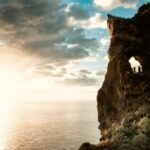
Ponta de São Lourenço is the eastmost point of Madeira, and it’s a very different mood from the greener parts of the island. Around Caniçal and São Lourenço, the climate is described as similar to Porto Santo, and the vegetation changes accordingly.
This is one of the few places on Madeira where the tour description highlights a specific “wow condition”: on a clear day, you can see both the north and south coasts at the same time. The tour info also notes that on clear days you can even spot Porto Santo.
There are rock formations here too, plus mention of a coast plant called ice plant. Admission is not included for this stop, so expect a small extra cost if you enter controlled areas.
What I’d plan for: this is the kind of coastline where the air can feel sharper and the wind can hit you. If you care about photos, visit with time to adjust your position and wait for the best light rather than rushing through.
Porto da Cruz: a north-coast village with a working sugar connection
Before you head back toward Funchal, you stop in Porto da Cruz, a rural village on the north coast. It sits at the foot of Penha d’Aguia, with steep terraced slopes on the other side.
Porto da Cruz is also tied to sugar history—specifically, it’s noted as the only running sugar mill on the north coast. You can spot the brick chimney, and the village also has a sea promenade, which makes this a nice “settle down” moment.
This stop tends to work well if you like local life. It’s not a theme park viewpoint. It’s a village scale moment, plus it helps you feel the north coast’s rhythm after the cliff lookouts.
Time here is about 25 minutes, so you’re looking and moving. If you want a longer lunch or a longer stroll, you’d need your own extra time.
Price, value, and what costs extra
At $38.98 per person, the big value piece is that you get a professional guide, an air-conditioned vehicle, and hotel pickup and drop-off for hotels in Funchal + Caniçal + Caniço + Carama de Lobos areas (as specified). You also get free admission for many of the viewpoint stops on the route.
Where your wallet might get tapped:
- Balcões levada walk has a 3 euro entrance fee (not included).
- Ponta de São Lourenço has admission noted as not included.
- Lunch is not included.
- If you’re on a cruise, pickup from the cruise ship port isn’t included and needs an extra €5 per person.
Is it still worth it? Usually yes—because you’re paying for a full-day guide-led route plus a lot of high-impact scenery. The extra fees are small compared with the time and transport you avoid by not driving yourself.
Guide quality matters: what to watch for in the real world
This is one of those tours where the guide can make or break the day. Many names show up with strong praise, like Oscar (fast-paced, lively explanations), Rui (patient and helpful), Carlos (friendly narration, even when weather was rough), Nelson (useful info), and Ernesto (fun, informative, low-stress handling).
When the weather is bad, a good guide also helps you salvage the best experience anyway—often by adjusting what you can see and where you can pause for views. You’ll notice the day still runs well when the guide knows the island and reads the crowd.
But here’s the practical risk: guide problems do happen. If you’re picky about explanations, communication, or pacing, I’d suggest you check details with the operator before you go and confirm what’s included in the guide’s role.
Also, remember that this tour moves through a mix of quiet viewpoints and windy terraces. If you struggle to hear at certain points, pick a seat closer to the front and ask questions when you stop.
Timing, comfort, and how to prepare
Start time is 8:30 am, and the day is about 8 hours. You’re going from sea-level areas to high elevations and then back down, so your body will feel the temperature shifts even if the walking is short.
Bring:
- layers (foggy peak weather is a real possibility),
- a rain layer you’ll actually wear,
- shoes with grip for forest paths and any uneven terrain,
- and a light snack plan since lunch isn’t included.
Group size is capped at 30, which generally helps with getting attention from the guide and staying organized. Still, it’s not a private tour—so you’ll want to be okay with a bit of waiting while everyone finishes photos.
Who should book this Pico do Arieiro and Laurissilva tour
This tour is a strong match if you:
- want a one-day sampler of Madeira’s east side,
- like viewpoints and short walks more than long hikes,
- and prefer guided driving over figuring out the route yourself.
It’s also ideal if you’re curious about how Madeira’s geography connects to culture—Christ statue views over Funchal, Camacha’s house style, Santana’s triangular farm buildings, the Laurissilva forest trails, and the north coast’s geology.
If you dislike fast-paced travel, or you know you’re sensitive to cold and fog at elevation, you might find the day a bit “hit or miss” for the highest views. In that case, you’ll still enjoy the lower-elevation stops, but expect reduced peak drama on cloudier days.
Should you book this East Madeira full day tour?
I’d book it if your goal is to cover the island efficiently and you’re happy that weather can change visibility at Pico do Arieiro. For the price, you get a guide-led route that mixes UNESCO nature, farm culture, and multiple coastlines—plus the convenience of pickup in the main hotel zones.
Skip it or think twice if you need lots of free time to linger, if you hate walking on uneven ground, or if you’re the type who will be disappointed by fog at high altitude. In Madeira, the coast is reliable. The clouds are the variable.