REVIEW · HISTORICAL TOURS
A Self-Guided Walk Through Funchal’s Historic Heart With a Local
Book on Viator →Operated by VoiceMap Audio Tours · Bookable on Viator
Funchal clicks into place fast on foot. This self-guided audio walk threads together key Protestant landmarks, old streets, and sea views in Funchal’s historic center, with a pace that lets you stop and actually look. I really like how the route hits major sights without turning into a checklist.
Two things I especially enjoy: the app narration works smoothly for an easy solo-friendly experience, and the walk includes both well-known stops and quieter corners that help you understand how the city grew. One consideration: the route focuses on certain corners of the old center, so if you’re hunting for every top church in town (like the Cathedral), you may feel like something big is missing.
You can finish with snacks and a proper wander at the market area, which makes the whole outing feel like a complete half-day plan instead of just photos.
In This Review
- Key Highlights You’ll Feel on the Walk
- Why This Funchal Historic-Center Walk Feels Worth It
- Starting at Quinta Vigia: Calm Before the City Noise
- Santa Catarina Park and Chapel: Small Space, Big Details
- Old Protestant Cemetery: A Soft Stop With Real Meaning
- First Protestant Church and the Link to Madeira Wine
- São Pedro and St. Peter’s Church: The Old-Core Feeling
- Wave-Patterned Cobblestones and the St. John the Evangelist Church
- Zarco’s Statue: The Explorer Who Changed the Island
- Palácio de São Lourenço: Fortress Energy in the City Center
- Along the Quay: Sea Views and Maritime Momentum
- Praça do Povo and Praça da Autonomia: Two Squares, Two Moods
- Mercado dos Lavradores and the End at Cica Café
- Value vs. Cost: What You’re Actually Buying
- Who This Walk Is Best For
- Timing and Practical Comfort Tips
- Should You Book This Funchal Historic Heart Walk?
- FAQ
- How long is the walk in Funchal?
- Where does the experience start and end?
- Is the audio available in English?
- Is this a self-guided audio experience or a live guided tour?
- How much does it cost?
- Do I need to book far in advance?
- Can I cancel for a full refund?
- Is it suitable for most travelers, and can service animals join?
Key Highlights You’ll Feel on the Walk
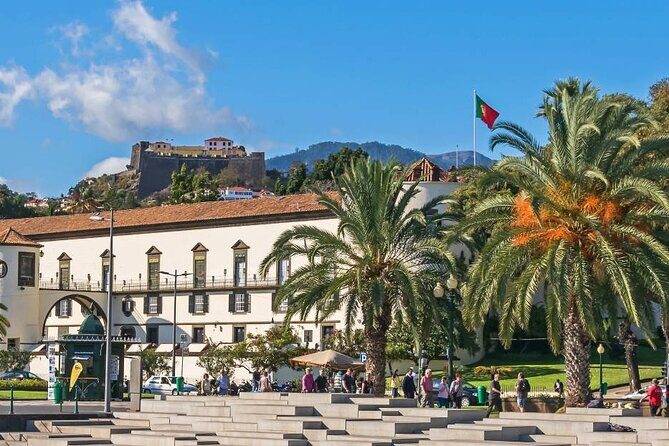
- Audio guidance that keeps you oriented so you don’t lose time guessing where to go
- Protestant-era landmarks that reveal a lesser-known side of Madeira’s story
- Manueline architecture at Santa Catarina Chapel—detail work you can actually take in
- Cobblestone squares and churches that reward slow looking, not speed-walking
- Ending at Mercado dos Lavradores so you can turn history into lunch or a snack
Why This Funchal Historic-Center Walk Feels Worth It
If you’ve ever done a “tour” where you spend more time moving than learning, this format is a smarter fit. You get a planned route through Funchal’s older core, but you’re not trapped in someone else’s pace. The narration helps you connect the dots as you walk, which is the real value in any self-guided tour.
At $8.99 per person for roughly 1 hour 30 minutes to 2 hours, this is the kind of experience that makes sense even if Madeira is just one stop on your trip. You’re paying for time saved and context added. And since it’s private for your group, you’re not stuck listening over other people’s conversations.
You can also read our reviews of more walking tours in Madeira


Starting at Quinta Vigia: Calm Before the City Noise
You begin at Quinta Vigia, the official residence of the regional president. It’s not the kind of place you usually stumble into on a normal walking day, and that’s part of why it works as a starting point.
What I like about starting here is the contrast. You’re in a green, quiet pocket with views toward the coast, and then the walk nudges you back into Funchal’s historic rhythm. Even if you don’t spend ages here, the setting helps you understand that Funchal isn’t only stone streets—it’s a city built against a dramatic coastline.
Practical tip: This is a good spot to gather yourself. Make sure your phone audio is ready, headphones fit comfortably, and you’re set before you leave the quieter start.
Santa Catarina Park and Chapel: Small Space, Big Details
Next up is Santa Catarina Park, a peaceful pause where the gardening focus makes sense in Madeira’s climate. The stop also ties you to Santa Catarina Chapel’s Manueline architecture, which is a style known for ornate detail and Portuguese maritime-era craftsmanship.
Why this matters: a lot of first-time visitors rush past chapel exteriors like background scenery. Here, the audio prompts help you slow down enough to notice design choices, not just the fact that a building exists. If you enjoy architectural details, this is one of the better “take a closer look” moments on the route.
If you’re short on time during your Madeira trip, this park-and-chapel segment gives you one high-impact cultural stop without requiring a long detour.
Old Protestant Cemetery: A Soft Stop With Real Meaning
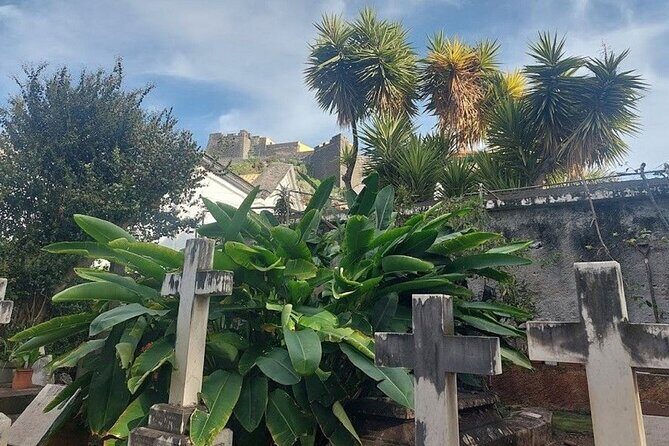
Then comes the oldest Protestant cemetery in Portugal. This isn’t a quick photo-and-go stop. It’s a quiet reminder of Madeira’s connections beyond the island itself, particularly the Anglo-Portuguese alliance.
A cemetery can feel heavy, but it’s also where history becomes personal. The route frames it as part of the island’s cultural mix—people from different backgrounds, and influential figures whose choices left traces here.
How to make this stop work for you: don’t rush it. Even five minutes of looking carefully changes how the rest of the walk lands, because you start noticing how many layers of Madeira’s story have outside threads.
First Protestant Church and the Link to Madeira Wine
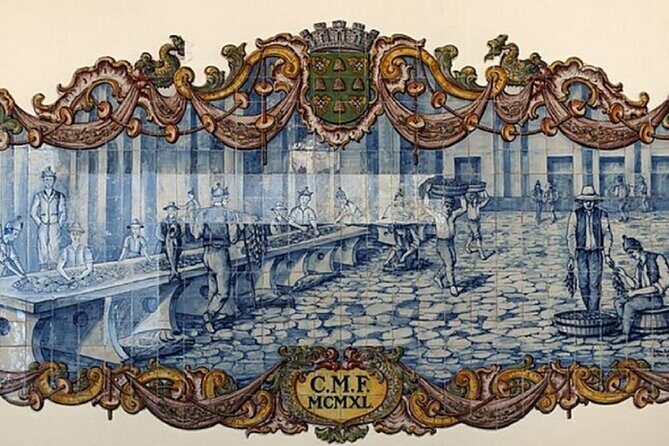
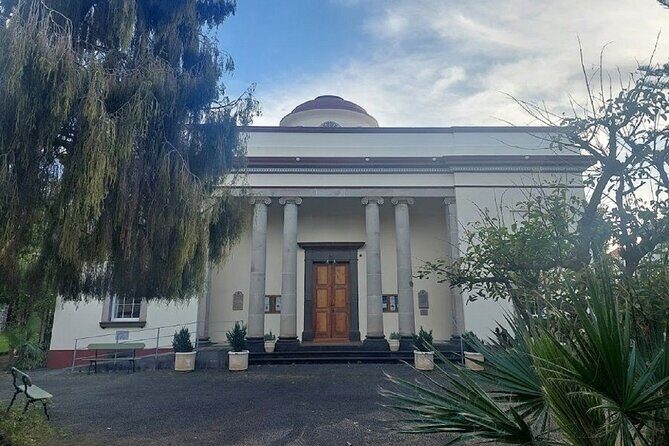
After the cemetery, you visit the first Protestant church in Portugal. What’s especially interesting here is how the story connects faith, community, and money from Madeira—the church was partially funded through the historic sale of Madeira Wine.
That detail matters because it shows you how economics and identity overlap on an island. Madeira Wine wasn’t just a product shipped outward; it also helped shape what happened inside the city.
If you like when a tour gives you one concrete, memorable fact to anchor the rest, this is that moment. You’ll walk away with a clearer sense of why these Protestant sites belong in Funchal’s center.
You can also read our reviews of more guided tours in Madeira




São Pedro and St. Peter’s Church: The Old-Core Feeling

Next you move into São Pedro, known for its older-center atmosphere. You’ll find St. Peter’s Church here, a revered site with artistic and architectural details that connect to Madeira’s earlier past.
This stop is about atmosphere as much as it is about buildings. The older streets and the church setting make the area feel like a living timeline, especially when you pair the audio explanations with what you see around you.
Best way to enjoy this part: keep your expectations flexible. Don’t only look for the “big sight.” Notice how the church fits into the street life and how the surrounding buildings guide your sense of direction.
Wave-Patterned Cobblestones and the St. John the Evangelist Church
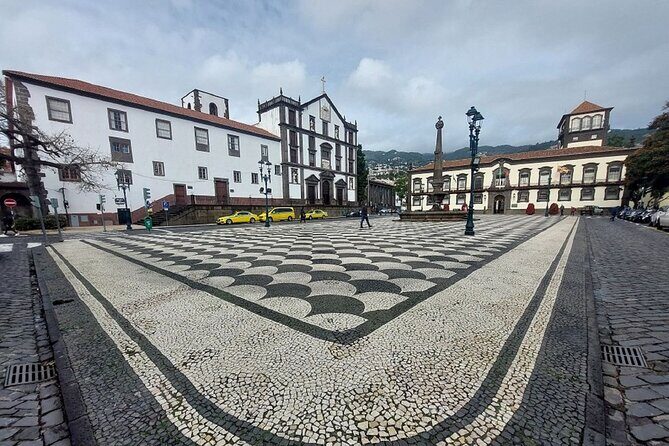
One of the most distinctive segments is the wave-patterned Portuguese cobblestone pavement in the São Pedro square area. It sounds small, but it’s the kind of detail that makes your photos look more “real,” because the ground texture becomes part of the story.
Then the walk points you toward nearby monuments, including St. John the Evangelist Church, described through its architecture and intricate carvings, plus gilded interiors.
This is where slow walking pays off. If you rush, you’ll miss the carvings and the interior effect. If you linger, you’ll get the sense that Funchal isn’t only about scenic viewpoints; it’s about craft.
Practical tip: wear shoes you trust on cobblestones. Even if the route isn’t long, the uneven surfaces can feel tiring if you’re in flimsy footwear.
Zarco’s Statue: The Explorer Who Changed the Island
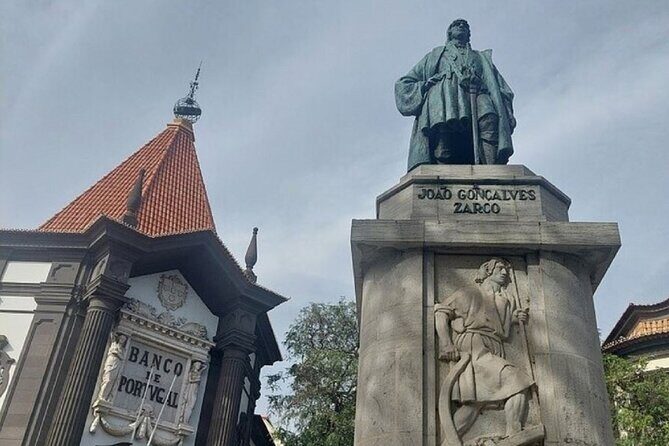
In the heart of Funchal, you meet Zarco via a tall statue. The audio explains his role in the settlement and notes that he unveiled Madeira about 600 years ago, shaping the island’s destiny in practical ways.
This stop is a helpful gear change. Up to now, you’ve learned through places tied to architecture and community. Zarco adds a cause-and-effect layer: people, decisions, settlement, and long-term impact.
If you enjoy history that connects to geography, you’ll probably find this statue stop adds energy to the rest of the walk.
Palácio de São Lourenço: Fortress Energy in the City Center
Next is Palácio de São Lourenço, described as Funchal’s first-ever fortress. Even from outside, the feeling of a defensive structure changes how you read the streets around it. You start thinking: where did people watch for danger, where did they control access, and how did the city protect itself?
This is a smart mid-walk stop because it shifts you from cultural landmarks to the city’s strategic logic. It also helps you understand why certain streets and squares feel “important” even when you’re just walking through them.
Along the Quay: Sea Views and Maritime Momentum
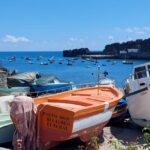
After the fortress stop, the route continues with a leisurely stroll along the quay. Madeira’s coastline isn’t a background blur—it’s part of the city’s identity, and the waterfront helps you feel that immediately.
Look for the way the city opens toward the sea. You’re not just passing a scenic strip; you’re getting the “why” behind Funchal’s historic importance as a maritime stop.
If the sun comes out, this is when your walk can feel especially relaxing. If it’s cloudy or breezy, the same section can feel dramatic—either way, it’s a strong change of pace.
Praça do Povo and Praça da Autonomia: Two Squares, Two Moods
Then you reach Praça do Povo, a lively gathering place where locals and visitors share the square energy.
After that comes Praça da Autonomia, anchored by the Monument to Autonomy showing a woman breaking free. It’s the kind of public art that gives you more than a photo; it gives you a mood—pride, freedom, and identity.
These two squares work well back-to-back because they show how public spaces hold different kinds of life. One feels like daily meeting and movement. The other feels like a statement carved into the city’s mind.
If you’re the type who likes “people-watching with context,” this portion delivers.
Mercado dos Lavradores and the End at Cica Café
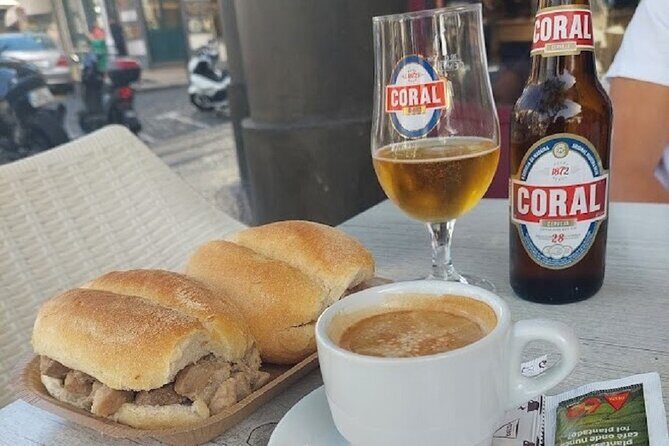
You finish at Mercado dos Lavradores, one of the best ways to end a historic walk because it turns culture into taste. The market is described as a lively space where the sights, sounds, and flavors of Madeira come alive.
This is also where you can turn the last stretch into a practical reward. You’ll find options that match the island’s food culture, and it’s an easy place to keep exploring without needing a reservation plan.
The tour ends near Cica Café, which makes sense for a post-walk coffee, a snack, or a sit-down break if you want one. Even if you’re not “market shopping,” the energy itself is part of the experience.
Tip: give yourself a little buffer time at the end. If you rush into the next stop, you’ll miss why ending at a market is a smart move—it makes the day feel complete.
Value vs. Cost: What You’re Actually Buying
For $8.99, you’re not paying for a long, scripted group itinerary. You’re paying for:
- a structured walking route in Funchal’s historic center
- audio context that keeps the time useful
- the freedom to stop when something catches your eye
That combination is especially good if you travel at a flexible pace. The whole setup also works well for solo travelers, since the narration supports you even when you don’t have a companion to bounce questions off.
If you prefer guided tours, you might wonder about the tradeoff. The upside here is control: you can pause, look longer at the Manueline details, spend more time near the Protestant landmarks, or linger at the sea views without feeling like you’re holding the group back.
Who This Walk Is Best For
This experience is a strong match if:
- you want an easy way to learn Funchal’s old center without booking a full-day tour
- you like self-paced walking with story prompts that keep you from missing key context
- you’re traveling alone or with friends and want a cost-effective activity
It’s also a good option if you’ve got limited time and want the walk to do the work of orienting you.
Timing and Practical Comfort Tips
The route is designed for about 1 hour 30 minutes to 2 hours, so plan around normal walking pace plus a few thoughtful stops. It’s not an all-day trek, but the cobblestones and older streets can slow you down in a good way.
Bring:
- comfortable shoes for Portuguese cobblestone pavement
- charged phone for uninterrupted audio
- a light layer if you’re sensitive to sea breezes on the quay
Should You Book This Funchal Historic Heart Walk?
If you want a low-cost, high-context way to understand Funchal’s historic core, I think this is a very safe booking. It hits meaningful Protestant landmarks, adds architectural and street-level detail, and ends where you can reward yourself with Madeira flavors at the market.
The main reason you might skip it is if you specifically want a route that covers every major church and top “must-see” in Funchal in one go. This one focuses on its own story thread. If that story thread matches what you’re curious about—Madeira’s connections, its architecture, and its city layout—then it’s an excellent way to spend your time.
FAQ
How long is the walk in Funchal?
It takes about 1 hour 30 minutes to 2 hours.
Where does the experience start and end?
It starts at Quinta Vigia on Av. do Infante 1, São Martinho, Funchal. It ends near Cica Café / Mercado Lavradores at Lj. 1/2, Funchal.
Is the audio available in English?
Yes, it’s offered in English.
Is this a self-guided audio experience or a live guided tour?
This is a VoiceMap Audio Tours experience, and it’s described as self-guided. It’s also private for your group.
How much does it cost?
The price is $8.99 per person.
Do I need to book far in advance?
Most bookings are made about 9 days in advance on average, so planning ahead can help.
Can I cancel for a full refund?
Yes, free cancellation is available. To get a full refund, you must cancel at least 24 hours before the experience starts.
Is it suitable for most travelers, and can service animals join?
Most travelers can participate, and service animals are allowed.