REVIEW · FUNCHAL
Northeast 4×4 Santana and Landscapes Day Trip
Book on Viator →Operated by Green Devil Safari · Bookable on Viator
Four-wheel drive meets Madeira’s quiet north.
This full-day 4×4 tour lets you see a lot of northeast Madeira without fighting bus schedules or winding your way alone. I also love that it runs with a small group (max 8), so the driver/guide can actually pause, explain, and answer questions.
You’ll get a mix of sea-and-mountains stops, traditional towns, and the rum story behind Porto da Cruz and Engenhos do Norte. One thing to watch: the tour lists bottled water included, but one key detail can be inconsistent—so it’s smart to bring your own bottle just in case.
In This Review
- Key highlights at a glance
- A 4×4 Day From Funchal: timing, pickup, and how the day runs
- Ponta Delgada and Boaventura: sea views with real quiet
- Arco de São Jorge and São Jorge: fertile northern villages and wine connections
- Santana’s Casas Tipicas and Fortim do Faial: iconic houses plus artillery history
- Porto da Cruz and Engenhos do Norte: rum, steam engines, and how sugar changes form
- Caniçal and the Azores connection: fishing village roots and island history
- Price and value around $82.82: what you’re really paying for
- Who should book this 4×4 Santana and Northeast tour
- Should you book Green Devil Safari’s day trip?
- FAQ
- What time does the tour start?
- How long is the trip?
- Is pickup available from hotels in Funchal?
- What’s included in the price?
- Is lunch included?
- What group size should I expect?
- Is bottled water definitely provided?
- Is the tour easy for most people to join?
Key highlights at a glance

- Small group max 8 makes the day feel personal, not rushed chaos
- 4×4 access helps you reach remote-looking viewpoints and villages
- Santana’s triangular thatched houses are a quick stop with a strong wow factor
- Porto da Cruz + Engenhos do Norte connects sugarcane to rum using old machinery
- Fortim do Faial mixes a viewpoint with English-origin naval artillery history
- Madeira’s northeast farming culture shows up at almost every turn
A 4×4 Day From Funchal: timing, pickup, and how the day runs
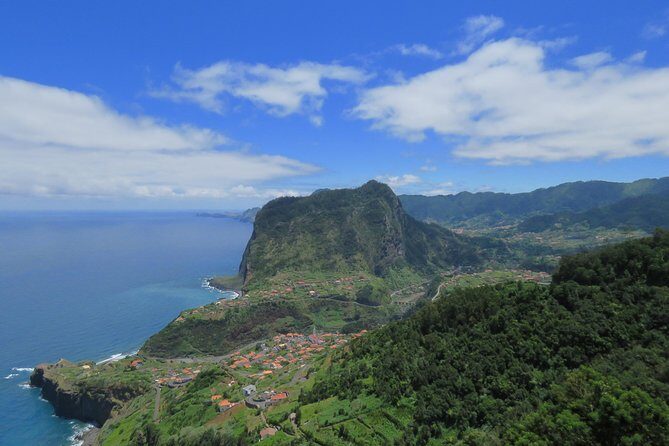
This is an 8-hour day trip starting at 8:30am from Funchal. If you’re staying in the Funchal area, pickup is offered, and the tour includes hotel pickup and drop-off (with free pick up in Funchal; outside town may add a fuel tax). If you’re arriving via the cruise dock, plan on an extra €5 per person for port pickup.
The drive is part of the experience. You’re headed into the northeast of Madeira, where the roads can look dramatic even when you’re not getting out. With a driver/guide who’s willing to stop and talk, you’re not just passing scenery—you’re getting context for what you’re seeing: farming patterns, settlement history, and why certain towns sit where they do.
Also, keep the day’s pacing in mind. Many stops are around 10–15 minutes. That’s plenty for photos, a short walk, and a quick look around, but it’s not the kind of tour where you linger for an hour. If you want long breaks for cafés, you’ll likely need to plan around that (and yes, lunch is extra).
You can also read our reviews of more tours and experiences in Funchal.


Ponta Delgada and Boaventura: sea views with real quiet
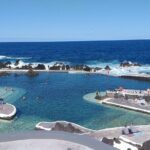
Your first stop is Ponta Delgada, a village economy built on agriculture, small commerce, services, and tourism. It sits right by the sea and looks out over a cliff, so the “church by the sea” vibe is easy to spot. You also get a look at a modern pool complex, which helps show how these coastal spots balance tradition and today’s visitor needs.
From there you move to Boaventura, an agricultural hillside village where valleys are carved by multiple water courses. It’s described as one of the oldest colonised villages and comparatively isolated, which is exactly the feeling you should look for: slower, quieter, and more about daily life than sightseeing boxes. This stop is short, but it’s a nice palate cleanser after busier towns—more nature and less tourist infrastructure.
A quick practical tip: at stops like these, wear shoes you’re comfortable standing in for photos. The views can be worth a little shuffling around, and you won’t want to rush your footing just to get the shot.
Arco de São Jorge and São Jorge: fertile northern villages and wine connections
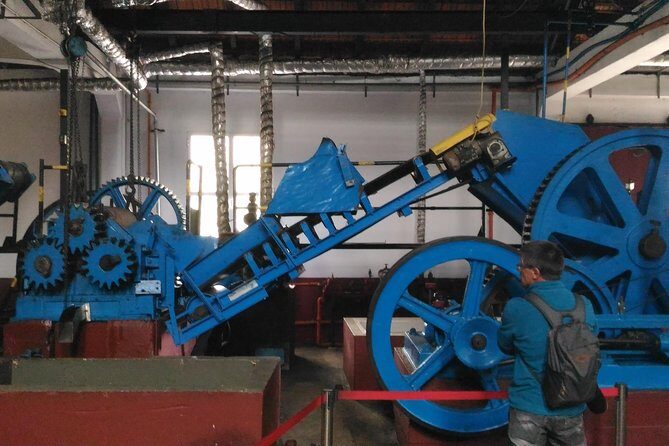
Next are Arco de São Jorge and São Jorge, both in Madeira’s northeast and both heavily tied to land and farming. Arco de São Jorge is a seaside village surrounded by mountains and vineyards, with a small population. The key idea here is microclimate: the area is fertile enough to support multiple agricultural products. Even in a short stop, you can feel why vineyards belong here.
Then you reach São Jorge, often described as among the most fertile northern villages, producing many agricultural products. Two specifics matter if you’re a Madeira wine fan:
- Sugar cane cultivation happens here.
- The area links to Malvasia wine, the grape used to produce the Madeira wine you’ll recognize back home.
This part of the tour helps you connect dots. It’s easy to see “pretty villages” on a day trip. It’s more interesting when you see the business behind the beauty—why these villages look the way they do and what they grow.
Santana’s Casas Tipicas and Fortim do Faial: iconic houses plus artillery history
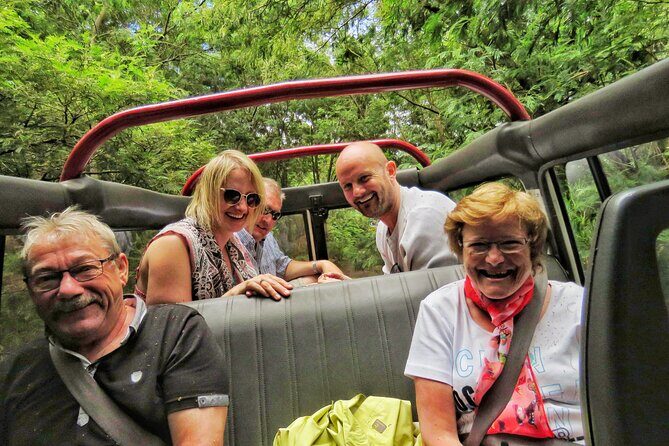
One of the tour’s most recognizable stops is Casas Tipicas de Santana. This is where you get the famous colorful triangular houses made of stone and roofed with straw thatch. The origin is often traced to the 16th century, and today they’re kept as a tourist attraction. You won’t need long here to get the point: these houses look different from anything most people expect on Madeira, and they’re photographed for good reason.
Right after that, you head to Fortim do Faial, which still works as a viewpoint—something the site was used for starting in the early 1900s. What makes this stop more than just a scenic photo spot is the history details:
- The fort is decorated with 10 pieces of ante-artillery described as smooth-sided and of English origin.
- These were assembled in naval repairs.
- Traditionally, the artillery was used on feast days honoring Our Lady of the Nativity.
If you like places where you can spot the “why” behind a location, this is a strong stop. Even if you’re not into military details, the fact that the viewpoint function remains matters—it ties old and new together.
Porto da Cruz and Engenhos do Norte: rum, steam engines, and how sugar changes form
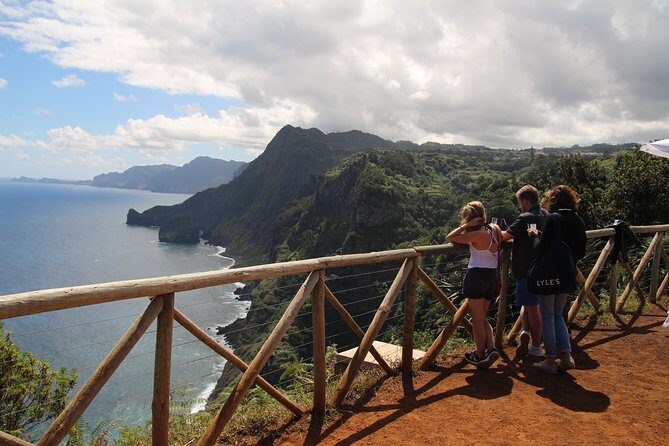
Now for the part many people book this tour for: Porto da Cruz and Engenhos do Norte (the old distillery area). Porto da Cruz gets its name from a cross placed on the shore to mark the port for Portuguese explorers. That “navigation and trade” origin makes the next sugar-and-rum story feel more grounded.
This town is linked to sugarcane, and today the processing factory is still in operation, producing rum and honey molasses. The info also notes that sugarcane processing has been operating in this town since 1927. In addition, Porto da Cruz produces vinho seco, a dry red wine that has become popular, and the town hosts a grape festival yearly.
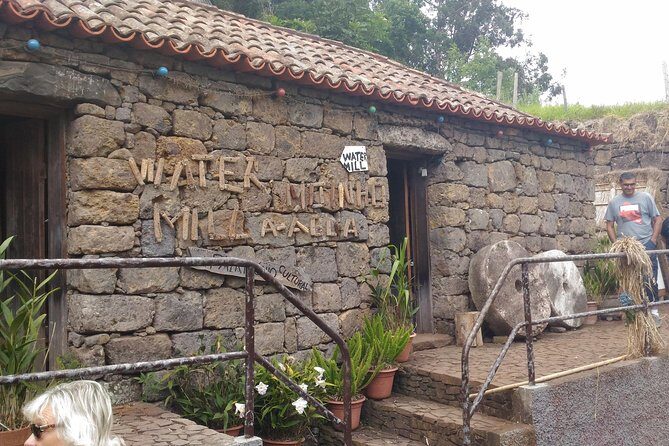
Then you go to Engenhos do Norte, where the emphasis shifts from what it makes to how it was made. This is described as an ancient rum distillery with steam engines that set the working pace, and the equipment is still maintained so it stays operational. That’s the difference between seeing a museum and seeing a working industrial past. Short stop or not, it gives you a sense of the rhythms of production rather than just a labeled display.
If you’re a drink person, you’ll likely enjoy connecting the dots between sugarcane fields you saw in the earlier villages and the rum production you see here. If you’re not a drink person, you’ll still get value from the industrial history angle and the clever way the tour builds a story.





Caniçal and the Azores connection: fishing village roots and island history
After the distillery stops, you finish with Caniçal, a small fishing village where the main catch is tuna. Even the name ties back to the local environment: it’s said to come from an abundance of reeds (caniço) that grew in more arid areas. Those reeds were used as fishing rods, which tells you how settlers relied on what was growing nearby.
Caniçal gives you a different side of Madeira than the vineyards and sugar cane. You’re seeing coastal life and how it shaped daily routines.
And in the bigger picture, the tour also includes learning about the first settlers of the Azores Islands. The specific details of that lesson aren’t listed stop-by-stop, but it’s an important reminder: Madeira didn’t develop in a vacuum. People traveled, settled, and brought systems of farming, fishing, and trade that echoed across the region.
Price and value around $82.82: what you’re really paying for
At $82.82 per person for about 8 hours, this tour can feel like good value if you care about coverage and context. Here’s why:
- You get hotel pickup and drop-off (Funchal area free pick up, with extra fees outside town or from the cruise dock).
- It includes a local guide/driver-guide and bottled water is listed as included.
- Many stops are marked with free admission in the schedule (so you’re not budgeting entrance fees on top of the ticket).
- You’re using a 4×4 vehicle, which is especially helpful when the day includes less-accessible roads and viewpoints.
Lunch is where you’ll probably spend extra. Food and drinks aren’t included, and lunch is listed as €12 per person if you choose it. If you’re trying to keep costs down, plan for snacks and a place to buy something, but the timing of short stops may not give you much sit-down time.
One more cost note: the tour is in English and is designed for a small group (max 8). If you’re someone who likes having time for questions, that small cap matters.
Finally, about the water: the tour lists bottled water included, but I’d still treat that as a nice-to-have rather than a guarantee. Bring your own if hydration is important to you.
Who should book this 4×4 Santana and Northeast tour
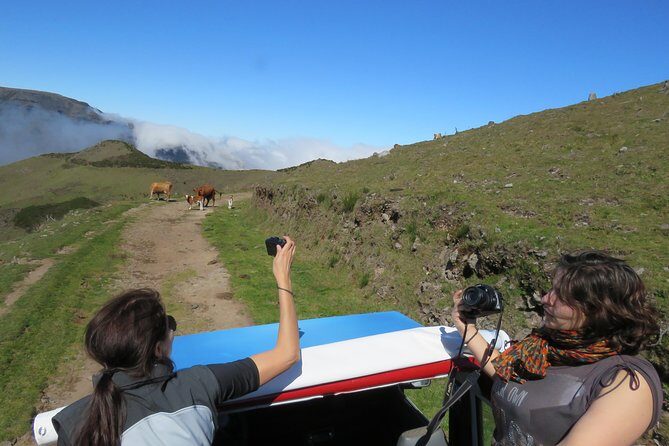
This is a great fit if:
- You want to see multiple parts of northeast Madeira in one day.
- You prefer a small group over being packed into a large bus.
- You like practical storytelling: farming, settlement, and how products like wine and rum connect to the land.
It may be less ideal if you:
- Want lots of long free time at each stop.
- Are picky about having bottled water provided in a specific way.
- Need a fully flexible schedule with lots of unscripted stops.
For most people, though, this hits the sweet spot of structured value with enough breathing room to take photos and walk a little.
Should you book Green Devil Safari’s day trip?
If you’re staying in Funchal and you want a 4×4 day that mixes iconic Santana architecture with real “how Madeira works” stops, I’d book it. The price makes sense for the coverage, and the small group size is a real quality upgrade compared with big-group excursions.
My main advice: pack a small bottle or buy water early at the start of the day. Then you can relax and enjoy what this trip does best—short but meaningful stops that connect villages, farming, fishing, and the rum-making machinery behind Porto da Cruz and Engenhos do Norte.
FAQ
What time does the tour start?
The start time is 8:30am.
How long is the trip?
The duration is listed as about 8 hours.
Is pickup available from hotels in Funchal?
Yes. Hotel pickup and drop-off is included for the Funchal area free pick up. Outside of Funchal may have extra fuel tax. Port/cruise dock pickup has an extra €5 per person fee.
What’s included in the price?
The tour includes a local guide, driver/guide, hotel pickup and drop-off, bottled water, and a mobile ticket. Admission tickets for the scheduled stops are listed as free.
Is lunch included?
No. Food and drinks are not included, and lunch is listed as €12 per person if you add it.
What group size should I expect?
The maximum group size is 8 travelers.
Is bottled water definitely provided?
Bottled water is listed as included, but one review noted no bottles were provided, so it’s smart to plan as if you may need to buy water.
Is the tour easy for most people to join?
It’s listed as most travelers can participate.