REVIEW · FUNCHAL
Full Day Santana Wonders and Northeast 4WD Experience
Book on Viator →Operated by Green Devil Safari · Bookable on Viator
One long day, lots of north-coast Madeira scenes, and a 4WD ride that keeps things moving. What makes this tour click is the mix of small village stops and hands-on island stories, plus hotel pickup that gets you out the door fast. The one watch-out: lunch isn’t included, so you’ll want to plan for food stops (or bring snacks) on a full 8-hour day.
I especially like that the guide work can be personal and flexible. You might get Jose, Duarte, or Leno/Lino style guiding, with plenty of time at the best viewpoints and talk about plants, wildlife, and local culture as you drive. One more consideration: some stops are quick photo breaks, so if you want long wandering time at every viewpoint, this format may feel a bit “press on.”
In This Review
- Key Things To Know Before You Go
- A 4WD Day That Feels Like Driving Through Madeira’s Best Chapters
- Sao Vicente and Ponta Delgada: Wine-Era Houses and Coastal Views
- Boaventura and Arco de Sao Jorge: Peaceful Valleys and Vineyard Microclimates
- Santana’s Iconic Triangular Houses (and Why This Stop Matters)
- Fortim do Faial and Porto da Cruz: Viewpoints and the Sugar-Rum Story
- Engenhos do Norte: Steam-Powered Rum Makes History Feel Real
- Caniçal: Tuna Fishing and the Reed Origins of a Name
- Why the Guide Changes Everything: Jose, Duarte, and Leno/Lino Styles
- Price and Logistics: How to Make the $81.66 Feel Like a Win
- What to Pack for Santana Wonders and Northeast 4WD
- Who This Tour Suits Best (and Who Might Want Something Else)
- Should You Book This Full Day Santana Wonders and Northeast 4WD Experience?
- FAQ
- What time does the tour start?
- How long is the full day tour?
- Is hotel pickup included?
- What if I’m staying outside Funchal or Caniço?
- Is lunch included in the price?
- What language is the tour offered in?
- What’s the group size limit?
- Which stops are included during the day?
- Can I get a refund if I cancel?
- Is a cruise dock extra fee charged?
Key Things To Know Before You Go
- Pickup-first convenience: free pickup around Funchal and Caniço center, with set extra fees for other pickup zones
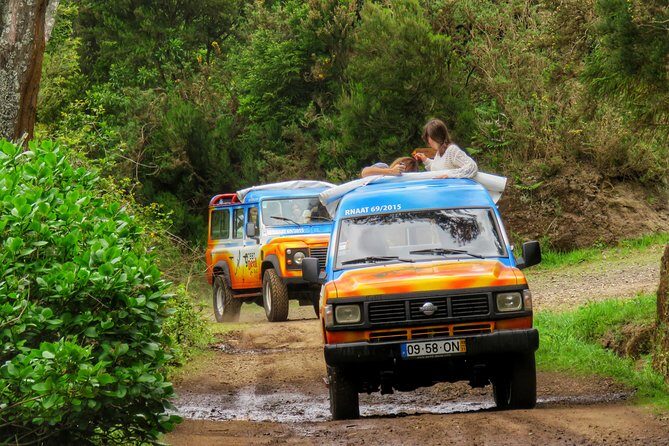
- 4WD countryside driving: the day is built around “get there” moments, not just sitting on a bus
- Village-and-farm stops: Sao Vicente, Ponta Delgada, Boaventura, Arco de Sao Jorge, and more keep the day varied
- Santana’s iconic houses: typical triangular stone-and-thatch homes are a highlight here
- Engenhos do Norte steam power: Madeira’s sugar-rum history comes alive at the old distillery
- Small-group feel: maximum of 50 people, so it’s easier to hear your guide and manage timing
A 4WD Day That Feels Like Driving Through Madeira’s Best Chapters
This is a full-day north and northeast Madeira route built around movement, viewpoint stops, and short cultural breaks. You’ll start at 8:30 am and expect about 8 hours, which is just enough time to feel like you’ve seen a lot—without trying to “do everything” across the entire island.
For the price (listed at $81.66 per person), the value comes from three things. First, you’re not paying extra for basic guidance and pickup in the Funchal/Caniço zone. Second, the day includes a serious practical highlight: a stop at Engenhos do Norte, with old equipment and a strong sense of how Madeira’s sugar and rum shaped the island. Third, the day mixes scenery with real island context—your guide isn’t just naming places, they’re explaining what you’re looking at.
You also get a straightforward travel style: you’re picked up, you drive, you stop, you learn, you eat when you can. No complex ticketing maze thanks to a mobile ticket.
You can also read our reviews of more tours and experiences in Funchal



Sao Vicente and Ponta Delgada: Wine-Era Houses and Coastal Views
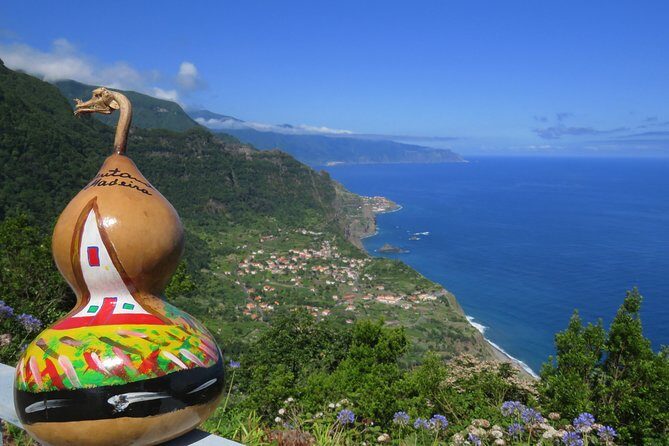
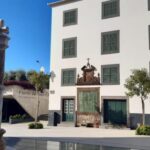
The day kicks off in Sao Vicente, a place where the buildings tell a story. You’ll see references to manor houses with roots back to the 18th century, a period when viticulture brought economic comfort. The description of these homes is a great mental picture: the winepress and tools lived on the ground level, while the more “noble” living areas were higher up, with outdoor stairs leading you to the elegant part of the house.
This stop is short—about 10 minutes—but it’s not pointless. It gives you context for why Madeira’s north coast looks the way it does: agriculture built wealth, wealth funded buildings, and those buildings still shape what you notice as you drive.
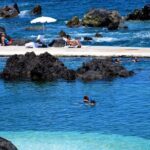
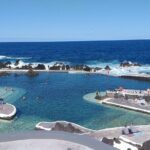
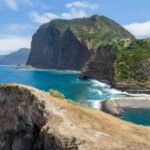
Next up is Ponta Delgada, a cliffside village where the view does half the work. You’ll overlook the coast and get a look at the charm of a small settlement, including a church by the sea and a new pool complex. Again, it’s a 10-minute stop, so treat it like a scenic breather and a chance to reset for more driving.
One practical note: if you’re sensitive to quick stops, bring your patience. This tour is designed for seeing many areas, so you’ll spend most of your time on the road and in brief, high-impact photo-and-learn moments.
Boaventura and Arco de Sao Jorge: Peaceful Valleys and Vineyard Microclimates
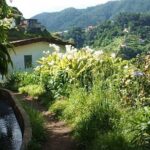
Then the route shifts toward quieter, farming-heavy parts of the island. Boaventura is described as an agricultural hillside village with valleys cut by watercourses. It’s also noted as one of the oldest colonized villages and almost isolated—so you’re not just looking at pretty terrain, you’re getting a sense of how people lived with fewer external influences and more reliance on local land.
Boaventura is positioned as a natural sanctuary of tranquility. That matters because it changes how you experience the island. Instead of chasing a single “big view,” you’re seeing how Madeira’s communities sit inside working landscapes.
From there, you’ll reach Arco de Sao Jorge, a seaside village surrounded by mountains and vineyards in the northeast. Its small size is part of the charm: you’re looking at a settlement of around 520 inhabitants. Your guide will likely connect what you see to the idea of a microclimate, where the land stays fertile enough to support different agricultural products.
Right around this region, the day also highlights São Jorge as one of the most fertile northern villages, including sugar cane cultivation and Malvasia wine, which connects directly to the wine base used to make famous Madeira wine.
The value here is how quickly the tour turns scenery into understanding. You start to notice what Madeira does best: agriculture, water, steep terrain, and community—stacked on top of each other.
Santana’s Iconic Triangular Houses (and Why This Stop Matters)
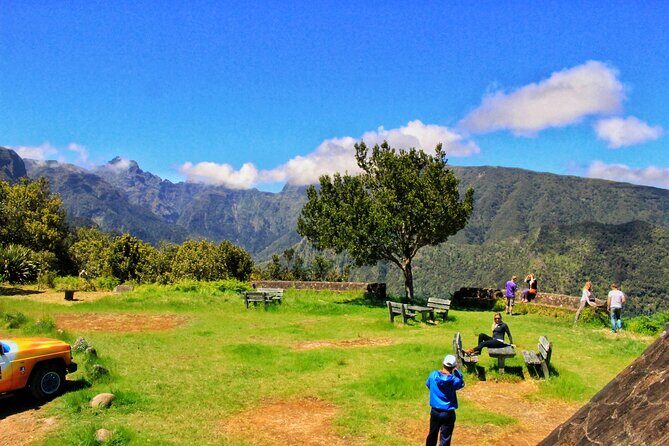
Now you hit Santana, and this is where the day really gets “Madeira postcard” energy. Santana is described as a great base for levada walks in the Laurisilva forests, with options such as Queimadas and Pico das Pedras. It also mentions the possibility for fit hikers to reach Pico Ruivo (1861 m) for views.
Your tour stop here is listed at 15 minutes, and that’s the right amount of time for orientation: you can take in the coastline-facing viewpoints, get a feel for the village setting, and (if there’s a little extra window) line up what you might do later on your own.
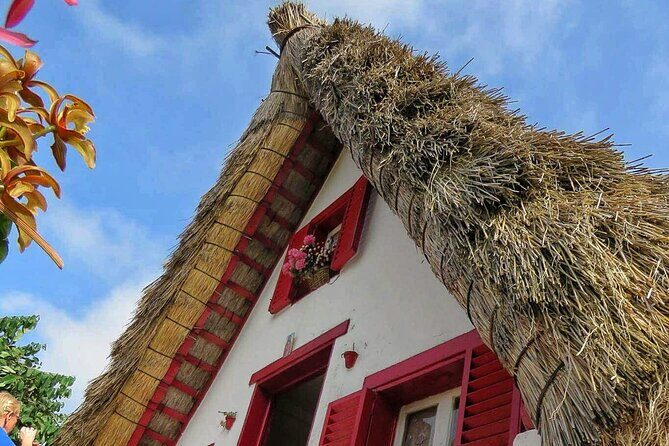
Santana also brings in the signature photo subject: Casas Típicas de Santana. These are the colorful triangular typical houses, built of stone and topped with straw thatch, with origins going back to the 16th century. Even if you’re not a “house person,” these buildings are a strong example of how island architecture adapted to local resources and climate needs.
This stop is about 15 minutes, so you’ll be able to see the main grouping, take photos, and move on without getting stuck in lines or waiting around.
A possible drawback: if you came specifically for long walking time through Laurisilva, this day won’t replace a full hiking plan. Think of Santana as your visual and cultural trigger—something that helps you decide what sort of levada day you want next.
Fortim do Faial and Porto da Cruz: Viewpoints and the Sugar-Rum Story
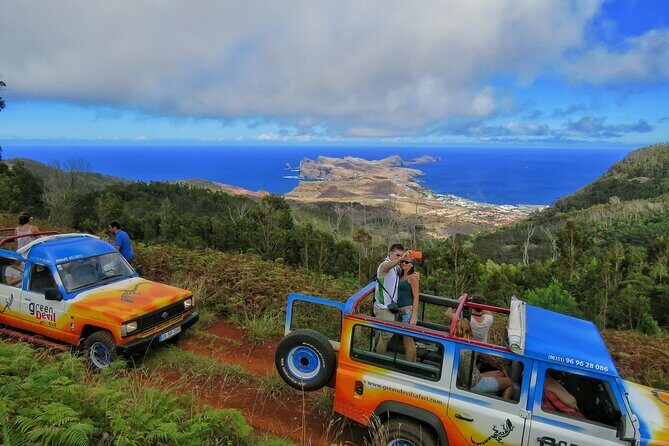
After Santana, the route brings you to Fortim do Faial. This is a smaller stop, about 10 minutes, but it’s meaningful. In the early 20th century, the area functioned as a viewpoint, and that visual purpose still exists. You’ll also see 10 pieces of ante-artillery that are described as being of English origin, assembled during naval repairs. The traditional connection is part of the story too: the artillery was used on feast days honoring Our Lady of the Nativity.
This kind of stop is what keeps the day from feeling repetitive. You get not just nature, but human layers—what people built and why.
Next is Porto da Cruz, a town named after the cross placed on the shore to mark the port for Portuguese explorers. It’s also tightly linked to sugar cane. Even today, processing continues, especially for rum and honey molasses (with operations noted as ongoing since 1927). The area also produces a dry red wine (vinho seco) and hosts a grape festival each year.
The tour includes a short stop here (about 5 minutes), which again tells you how the day works: quick location context, then on to the next anchor.
If you’re the type who enjoys food-and-industry travel, Portao da Cruz is a strong pivot from scenery to what Madeira actually produced and exported.


Engenhos do Norte: Steam-Powered Rum Makes History Feel Real
The highlight zone for many people is Engenhos do Norte, with a stop time of around 20 minutes. This is the old rum distillery, described as evidence of how important sugar cane was. The equipment includes ancient steam engines, and the working pace is tied to that older power system.
One of the most convincing parts of this stop is that the tour description frames it as operational and maintained by workers who still keep the equipment running. That gives you more than a museum feeling. You’re seeing a working industrial heritage concept—how sugar turned into rum and how the pace of the island’s economy shaped daily life.
While the itinerary notes the stop and history, the day’s vibe tends to lean practical: you’ll likely get a tasting moment (one of the guides’ “local flavor” strengths shows up here). Even if you skip tasting, the steam engine detail alone is a worthwhile reason to pick this tour for your first full day.
Caniçal: Tuna Fishing and the Reed Origins of a Name
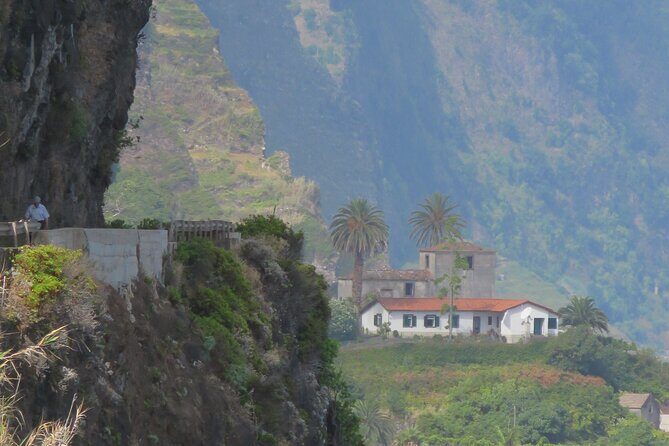
Near the end of the driving loop, you’ll reach Caniçal, a small fishing village. The tour description says tuna is the main catch, and it connects the name Caniçal to caniço reeds that grew in more arid parts of the parish.
That may sound like a small word lesson, but it helps you notice something: Madeira’s names often come from land and work. This isn’t random. Reeds used as fishing rods become a clue to how people adapted to their environment.
Caniçal is listed at about 10 minutes, so don’t expect a deep dive. Expect a quick look and a chance to check one more box of island identity—farming, wine, sugar, fishing—before you head back.
Why the Guide Changes Everything: Jose, Duarte, and Leno/Lino Styles
Here’s the pattern that keeps showing up: the day isn’t just about hitting stops. It’s about how the guide explains what you’re seeing and how they manage time.
If you get Jose, you’ll likely hear a lot of information on plants and trees, with the kind of stop-and-look pacing that lets you actually see details rather than just pass by them. If you get Duarte, the style described is very visual and “talks like a field guide,” especially when it comes to vegetation and wildlife. If you get Leno/Lino, the focus shifts to attentiveness and adaptability—sharing extra moments when something local is happening and making sure the experience feels personal rather than rushed.
Also, there’s a useful takeaway for you: if you care about certain themes (plants, wine, local cafes, viewpoints), a good guide will steer the day toward that interest. This tour’s format supports that because you’re stopping frequently. That means you’ll get more chances to ask a question and get a real answer.
One more nice touch from the guide approach: people described getting extra attention such as photos during the day. It’s not a must-have, but it’s the kind of thoughtful extra that makes a first Madeira day feel smoother.
Price and Logistics: How to Make the $81.66 Feel Like a Win
Let’s talk money honestly. At $81.66 per person for roughly 8 hours, you’re paying for a lot of driving, guide time, and pickup convenience in the main Funchal/Caniço zone.
But there are a few costs to keep in mind:
- Lunch is not included. This is the biggest “budget” item. If you don’t want to scramble for food, plan a lunch stop ahead of time or bring snacks.
- Fuel surcharge is not included. That can show up depending on the operator’s policies.
- There can be extra fees for pickup outside the free zone. For example, pickup at some areas costs extra (like cruise dock, certain towns, and farther pickup locations).
- If you’re coming from a cruise dock, there’s also a cruise dock extra fee listed as €5.00 per person.
So is it good value? Yes—if you want an organized north/northeast “first taste” day and you’re okay with a mix of short stops. If your dream Madeira day is slow, long hikes with no driving, you may feel rushed. If your dream is a high-quality overview with a couple of anchor stops (Santana + Engenhos do Norte), this fits nicely.
What to Pack for Santana Wonders and Northeast 4WD
Because you’re in a 4WD day format, you should treat it like a “weather and comfort” day, not a museum day.
Bring:
- A light layer for early morning and coastal breezes
- Sun protection (Madeira sun hits even when it feels mild)
- Comfortable shoes for quick walking around viewpoints and town stops
- Water and a small snack for the gaps (since lunch isn’t included)
If you’re prone to motion sensitivity, it’s worth knowing that at least some off-road driving is part of the fun described by people who enjoyed the day. Hold onto the moment, but also pack your comfort.
And do one smart thing: charge your phone and clear storage. The views and photo stops add up fast in a day like this.
Who This Tour Suits Best (and Who Might Want Something Else)
This tour is a great match for you if:
- You want to see a lot of Madeira in one day without planning your own route
- You like agriculture + wine + sugar history as much as scenery
- You enjoy frequent stops with a guide explaining what you’re looking at
- You want a 4WD feel rather than a slow, straight bus loop
It may be less ideal if:
- You want long hikes every time you stop
- You don’t want to think about lunch budgeting
- You prefer slow travel with minimal driving
Should You Book This Full Day Santana Wonders and Northeast 4WD Experience?
Book it if you’re starting your Madeira trip and you want a fast, high-value overview of the island’s northeast identity—Santana’s triangular houses, the steam-powered Engenhos do Norte, and the way villages connect to farming and wine.
Skip (or consider a different style tour) if you’re the type who gets grumpy with short stops and wants hours of walking instead of lots of quick “look and learn” moments.
If you like guides who talk plants, wildlife, and local context—and if you’re okay managing your own lunch—this is one of those days that gives you a clear “Madeira in one shot” feeling.
FAQ
What time does the tour start?
The tour start time is 8:30 am.
How long is the full day tour?
It runs for about 8 hours.
Is hotel pickup included?
Yes. Free pickup is included from Funchal and Caniço center.
What if I’m staying outside Funchal or Caniço?
Pickup is free in Funchal and Caniço. Other areas have extra pickup fees, including set rates for places such as Camara de Lobos/cruise dock, multiple towns at €10, and farther zones at higher fees.
Is lunch included in the price?
No. Lunch is not included.
What language is the tour offered in?
The tour is offered in English.
What’s the group size limit?
The tour has a maximum of 50 people.
Which stops are included during the day?
The day includes stops such as Sao Vicente, Ponta Delgada, Boaventura, Arco de Sao Jorge, Santana, Casas Tipicas de Santana, Fortim do Faial, Porto da Cruz, Engenhos do Norte, and Caniçal.
Can I get a refund if I cancel?
Yes. Free cancellation is available, and you can cancel up to 24 hours in advance for a full refund.
Is a cruise dock extra fee charged?
Yes. There is a cruise dock extra fee of €5.00 per person listed as not included.